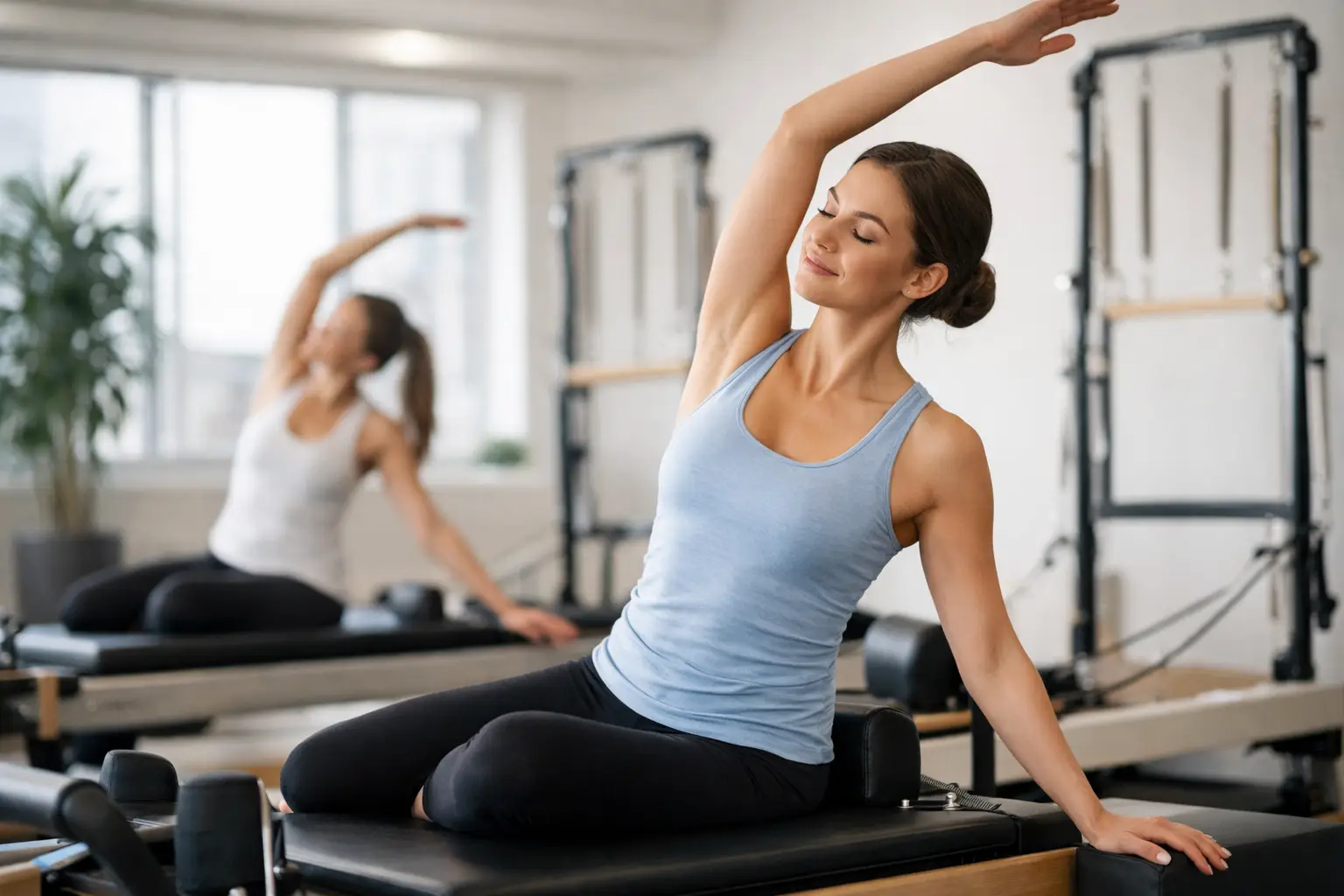
If your shoulders keep creeping forward by noon, your neck feels tight after a workday, or your low back starts talking every time you stand up, your body is asking for better support, not just more stretching. Pilates for better posture works because it trains the muscles that hold you up all day, while also improving the mobility and awareness that most adults lose from sitting, driving, and living on their phones.
Posture is not about forcing yourself to stand stiff and straight. It is about how well your body organizes itself when you walk, sit, lift, reach, and breathe. Good posture should feel strong and natural, not tense. That is one reason Pilates has stayed so effective for people who want lasting change instead of quick fixes.
Why posture problems keep coming back
A lot of people think posture is only a shoulder problem. In reality, it is usually a full-body pattern. Tight chest muscles, weak upper back muscles, limited mid-back mobility, poor core endurance, and hips that spend too many hours folded into a chair can all show up as slouching, forward head position, or an overworked low back.
The tricky part is that your body adapts to whatever you do most often. If you sit for long stretches, lean over a laptop, or carry stress in your neck and shoulders, those positions start to feel normal. Then when you try to “fix” your posture by simply pulling your shoulders back, it often feels awkward or exhausting because the deeper support system is not doing its job yet.
That is where Pilates stands out. It does not just tell you to sit up straighter. It helps you build the strength, control, and movement quality to support better alignment in real life.
How pilates for better posture actually works
Pilates focuses on controlled movement, core engagement, breathing, and alignment. That combination matters because posture is not one muscle. It is a coordinated effort between your abdominals, back, hips, glutes, shoulders, and rib cage.
When you practice Pilates consistently, you start strengthening the deep core muscles that help stabilize your spine. You also improve mobility in areas that tend to get stiff, especially the thoracic spine, shoulders, and hips. Just as important, you learn how your body feels when it is stacked and supported instead of collapsed.
That body awareness piece is often the missing link. You cannot change a habit you do not notice. Pilates teaches you to recognize when your ribs are flaring, your head is drifting forward, or your pelvis is tipping too far in one direction. Over time, that awareness carries into daily life – at your desk, in the car, during workouts, and even while standing in line.
The biggest posture benefits of Pilates
One of the first benefits people notice is less tension in the neck and shoulders. When your upper body no longer has to compensate for a weak core or stiff mid-back, those areas can finally stop overworking.
Another major benefit is better core endurance. That matters more than many people realize. Posture is not just about having a strong core for one exercise. It is about having enough endurance to support your spine through an entire day.
Pilates also improves hip and spinal mobility, which can reduce the strain that leads to an achy low back. If your hips move better and your mid-back rotates and extends the way it should, your lower back does not have to do all the work.
Then there is breathing. Poor posture often goes hand in hand with shallow chest breathing. Pilates encourages fuller, more intentional breathing patterns that help open the rib cage, support core function, and reduce excess tension. You stand taller, but you also feel calmer and more in control.
What good posture really looks like
Good posture does not mean military posture. It means your ears, shoulders, ribs, pelvis, knees, and feet are working in a balanced relationship most of the time. There is still movement. There is still softness. You are not trying to freeze yourself into a perfect pose.
This is especially important for beginners. If you have spent years in one pattern, your version of “upright” may actually feel too far back at first. That does not mean you are doing it wrong. It means your body is learning a new normal.
A supportive coach can make a big difference here. Small adjustments in foot pressure, pelvic position, rib alignment, or shoulder placement can completely change how an exercise feels. Instead of just getting through a class, you start understanding what your body needs.
Pilates for better posture at every fitness level
One of the best things about Pilates is that it meets you where you are. If you are new to exercise, it gives you a low-impact way to build strength and confidence without feeling beaten up. If you already work out regularly, it can sharpen your mechanics, improve your control, and help you move better during everything else you do.
For desk workers, Pilates can counterbalance long hours of sitting and screen time. For active adults, it can improve alignment and reduce the wear and tear that comes from training hard on top of poor movement habits. For people returning to fitness, it offers a practical path back to feeling capable and supported.
That said, results depend on consistency and proper instruction. A few random classes may help you feel looser, but lasting posture changes usually come from regular practice and attention to form. It is also worth recognizing that some posture issues are tied to injury history, structural differences, or pain patterns that need more individualized coaching. Better posture is possible, but the timeline is not the same for everyone.
Simple Pilates principles that carry into daily life
You do not need to think about posture every second of the day. That usually creates more tension, not less. What helps more is using a few simple Pilates ideas throughout your routine.
Start with your breath. If you catch yourself holding tension in your shoulders, take a fuller breath into your ribs and let your neck soften. Often, that alone improves your position.
Next, think about stacking rather than forcing. Keep your ribs over your pelvis as often as you can, especially when sitting or standing. That creates a more supported center and takes pressure off your back.
Finally, use movement breaks as posture practice. Standing up, reaching overhead, walking for a few minutes, or resetting your seated position can do more than trying to hold one perfect posture for hours.
What to expect when you start
Most people notice increased awareness first. You begin catching yourself slouching sooner, and you understand how to reset without overcorrecting. After that, many people feel less stiffness through the upper back, neck, and hips.
Strength and endurance usually build more gradually. Within a few weeks of steady practice, daily movement often feels smoother. You may find it easier to sit upright, walk with more confidence, or get through your workday with less tension.
The visual changes tend to follow the physical ones. When your core is stronger, your shoulders move better, and your spine has more support, you naturally look taller and more open. That kind of posture does not come from pretending. It comes from function.
In a coaching-based studio environment, that process can move faster because you get feedback, structure, and accountability. At TNT Fitness Studio B, for example, Pilates is part of a bigger picture that includes strength, mobility, and education, which helps members build posture that holds up beyond class time.
A stronger posture supports more than appearance
Yes, standing taller can change how you look. But for most adults, the bigger win is how you feel. Better posture can make workouts more effective, reduce everyday discomfort, improve breathing, and help you move through life with more ease.
It also supports confidence in a very real way. When your body feels stable and capable, you carry yourself differently. You have more energy for work, family, and the routines that matter to you.
That is why Pilates is such a smart choice for long-term wellness. It is not about chasing a perfect posture photo. It is about building a body that supports you well, day after day. Start where you are, stay consistent, and let stronger movement create the posture you have been trying to force.