Some people thrive when a coach is watching every rep. Others stay consistent because a room full of people is moving with them. When it comes to personal training vs group classes, the better choice is not the one that sounds more serious. It is the one that helps you show up, move well, and keep going long enough to see real change.
That matters more than most people think. A workout plan is only useful if it fits your body, your schedule, your confidence level, and your life outside the studio. If you are trying to build strength, improve mobility, support weight loss, or simply feel better in your body, the format you choose can make a big difference in how fast you progress and how sustainable that progress feels.
Personal training vs group classes: what is the real difference?
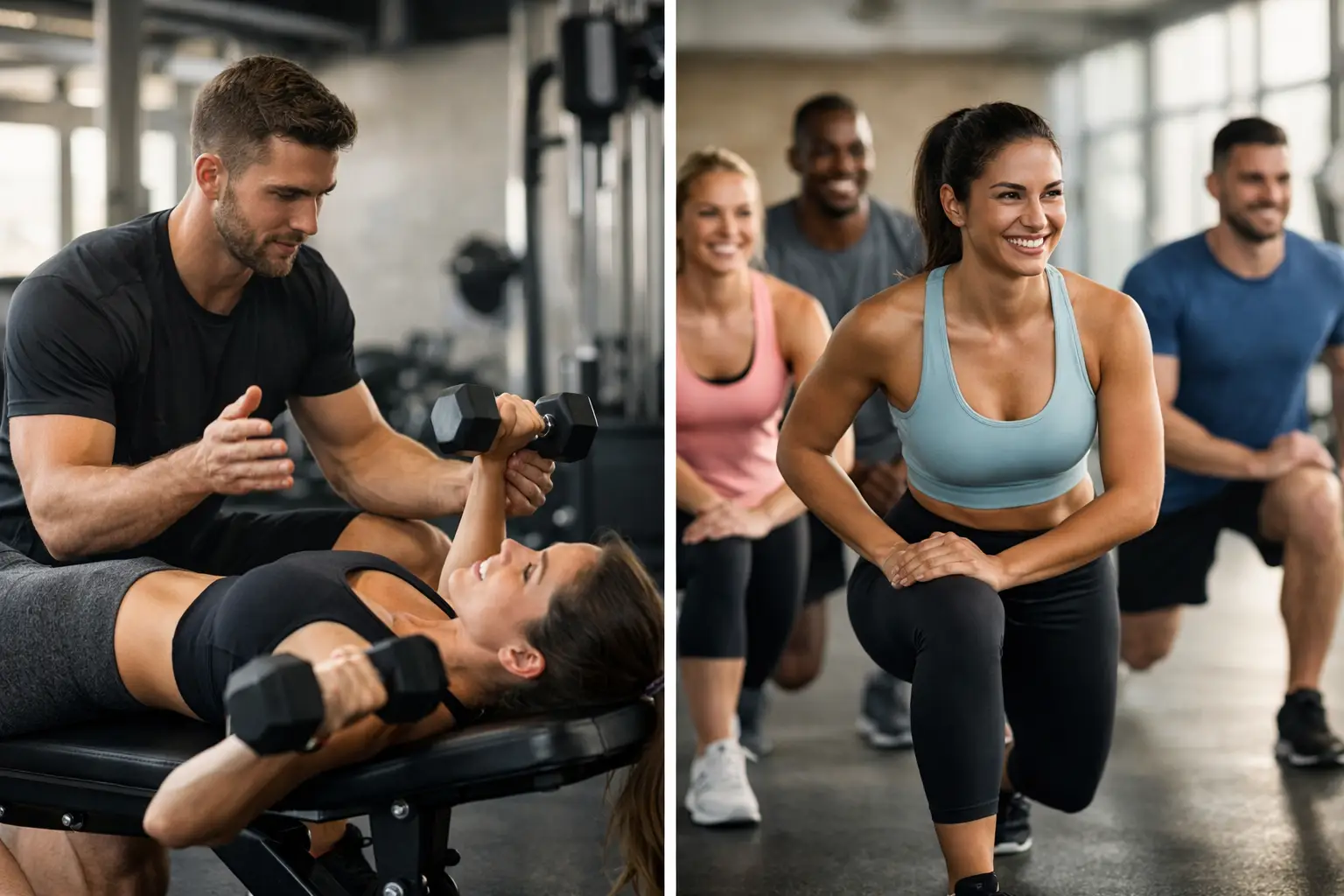
At a basic level, personal training is one-on-one coaching built around you. Your trainer watches your movement closely, adjusts exercises in real time, and shapes the session around your goals, limitations, and progress. That can be especially helpful if you are new to exercise, returning after a break, managing pain, or working toward a very specific outcome.
Group classes follow a shared workout structure with coaching delivered to the whole room. That does not mean they are generic or ineffective. In a strong studio setting, group classes are still coached with intention. You get guidance, motivation, and a plan to follow, but the attention is divided among the group rather than centered only on you.
The difference is less about which one is better and more about what kind of support helps you succeed. Some people need precision. Some need energy. Many do best with both at different points in their fitness journey.
When personal training makes the most sense
Personal training is often the fastest path to clarity. If you have ever walked into a gym and felt unsure where to start, one-on-one coaching removes that guesswork. You are not piecing together random workouts or hoping your form is correct. You are learning what your body needs and why.
This can be a major advantage for beginners. A lot of people avoid exercise because they do not want to feel lost or judged. Personal training creates a private space to build confidence. You can ask questions, slow things down, and focus on movement quality before worrying about pace or performance.
It is also a strong option if you have specific needs that deserve extra attention. That might mean improving posture, rebuilding strength after time off, increasing core stability, or working around old injuries and mobility restrictions. In these cases, customization is not a luxury. It is often what keeps training safe and productive.
Another benefit is accountability. When someone is expecting you at a set time and tracking your progress, it becomes harder to put your goals on the back burner. For busy professionals and adults juggling work, family, and a packed calendar, that structure can be the difference between good intentions and actual consistency.
The trade-off is cost. Personal training usually requires a bigger investment than classes, and for some people that affects how often they can come. If your budget only allows one session here and there, the results may depend on how well you follow through on your own between appointments.
Where group classes shine
Group classes bring something personal training cannot fully replicate: shared momentum. There is real power in walking into a room where everyone is working toward better health together. That energy can lift you on the days when motivation is low.
For many people, classes make fitness feel more approachable and more enjoyable. You do not have to design the workout, wonder what to do next, or talk yourself into exercising alone. You show up, follow the coach, and get the work done.
Classes can also be a smart fit for consistency. Because they are often more affordable per session, members can attend more regularly. That frequency adds up. Two to four well-coached classes each week can create meaningful improvements in strength, endurance, mobility, and body awareness.
This is especially true when classes focus on functional movement rather than just intensity. Pilates and circuit training, for example, can help you develop core control, balance, flexibility, and strength that carry over into daily life. You are not just burning calories. You are practicing better movement patterns that support long-term wellness.
The limitation is that group classes are designed for a range of participants. Even with strong coaching, the class has to keep moving. If you need extensive modifications, have a complicated injury history, or want highly specific programming, a class may not give you enough individual attention on its own.
Which option gets better results?
The honest answer is that results depend on more than the format. They depend on consistency, coaching quality, effort, recovery, and whether the program matches your goals.
If your priority is learning proper form, rebuilding after injury, or accelerating progress on a specific goal, personal training often wins. The feedback is immediate, the plan is tailored, and small adjustments can lead to faster improvements.
If your priority is staying active consistently, building a routine, and enjoying the process, group classes often win. A great class environment keeps people engaged. That matters because the best program is still the one you will actually stick with.
There is also the question of personality. Some clients love the focused attention of one-on-one coaching. Others feel more motivated when they are part of a group. Neither response is wrong. Fitness is personal, and the right environment should support your mindset as much as your muscles.
A smarter way to choose
Instead of asking which format is better, ask which problem you are trying to solve.
If you need confidence, technique, and a plan built around your body, start with personal training. If you need structure, community, and a schedule you can maintain, start with classes. If you want both support and sustainability, combining the two is often the strongest option.
That hybrid approach works well for a lot of adults because it covers both sides of progress. Personal training gives you individualized coaching, movement corrections, and strategy. Group classes give you repetition, routine, and the motivation that comes from showing up with others.
At TNT Fitness Studio B, that balance is part of what helps people make steady, realistic progress. You can build strength and mobility in a supportive class setting while still getting coaching that keeps your individual needs in focus.
Personal training vs group classes for common goals
If your goal is weight loss, either option can help, but adherence matters most. Group classes can make it easier to keep moving every week, while personal training can help you train more efficiently and pair exercise with realistic habits outside the studio.
If your goal is strength and better movement, both can be effective depending on the coaching. Personal training gives you more precise load progression and form correction. Group classes can still deliver excellent results when they are built around functional movement, controlled strength work, and clear instruction.
If your goal is mobility, posture, and feeling better in your everyday body, the quality of programming matters more than whether the session is private or shared. Low-impact training, Pilates-based work, and mobility-focused coaching can make a real difference in how you move, sit, stand, and recover.
If your goal is confidence, personal training often helps first. It gives you a chance to learn without pressure. Once that foundation is in place, group classes can feel far less intimidating and much more fun.
What beginners should know before choosing
Beginners often assume they have to earn the right to join a class or be fit enough to work with a trainer. Neither is true. Good coaching meets you where you are.
Still, it helps to be honest about what makes you hesitate. If you are nervous about keeping up, remembering movements, or being seen while you learn, a few personal training sessions may help you settle in. If you know you need social motivation and a set schedule to avoid quitting, classes may be the better first step.
There is no prize for choosing the harder-looking option. The real win is choosing the format that helps you build momentum now, not someday.
The best choice is the one you can sustain
Fitness does not need to be extreme to be effective. It needs to be coached well, matched to your life, and repeated often enough to matter. Personal training offers precision. Group classes offer energy and consistency. Both can move you forward when the environment is supportive and the programming is built for real people, not fitness trends.
If you are standing at the starting line, do not overthink it. Pick the path that feels realistic, supportive, and doable this season. You can always adjust as your confidence, goals, and strength grow.