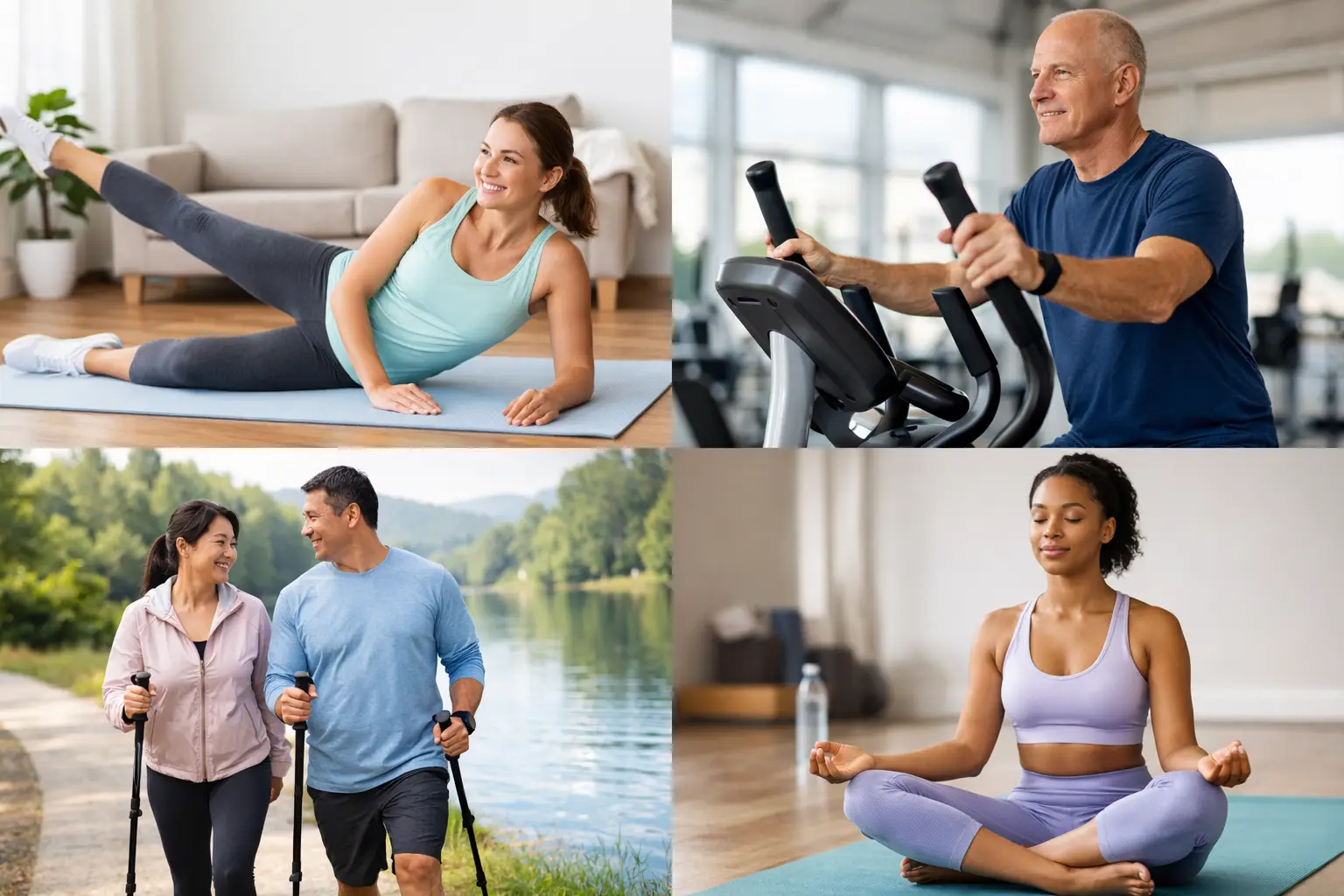
Some workouts leave you feeling strong and energized. Others leave your knees, hips, or lower back negotiating with you the next morning. If that second experience sounds familiar, the best low impact workouts can be a game changer. They help you build strength, improve mobility, raise your heart rate, and stay consistent without beating up your joints.
That matters more than most people realize. A workout does not need to feel harsh to be effective. For many adults, especially those getting back into exercise, managing old injuries, or trying to train in a way that supports long-term wellness, lower impact training is often the smarter path. It gives you room to improve without constantly recovering from the workout itself.
What makes the best low impact workouts effective?
Low impact does not mean easy, slow, or only for beginners. It simply means at least one foot usually stays in contact with the ground, or the exercise reduces pounding and repetitive force on the joints. That can make a big difference if you want sustainable progress.
The best low impact workouts tend to do three things at once. They challenge your muscles, improve how your body moves, and let you recover well enough to come back again. That last part is huge. Results come from consistency, not from one heroic workout followed by four days of soreness.
There is also a trade-off worth mentioning. If your main goal is maximizing speed, jump power, or high-level sport performance, you may still need some higher impact work at the right time. But for general fitness, fat loss, mobility, posture, and joint-friendly conditioning, low impact training covers a lot of ground.
1. Pilates for core strength and control
Pilates earns its place on any list of the best low impact workouts because it teaches control, alignment, and deep core engagement. Instead of relying on momentum, you move with precision. That helps strengthen the muscles that support your spine, hips, and posture.
For many people, Pilates is where they finally start to understand how to move well instead of just moving hard. You may notice better balance, stronger abdominals, improved flexibility, and more awareness of how your body is working. If you sit for long hours, deal with stiffness, or want a stronger foundation for other workouts, Pilates is an excellent choice.
It can also be more challenging than it looks. Small, controlled movements and isometric holds create real muscular fatigue, especially in the core and glutes.
2. Walking for accessible conditioning
Walking is often overlooked because it feels too simple. But simple and effective can absolutely go together. Walking improves cardiovascular health, supports recovery, helps with stress, and gives many people a realistic starting point.
The key is how you use it. A casual stroll has value, but brisk walking with intention is a workout. Add hills, intervals, or a longer duration and it becomes even more effective. For someone returning to exercise, walking can build the habit of movement without creating a recovery problem.
If your schedule is packed, two or three shorter walks across the day can still add up. That flexibility is one reason walking remains one of the most sustainable options out there.
3. Strength training with controlled movement
Strength training is not automatically high impact. In fact, many of the most effective strength workouts are low impact when done with control. Squats, deadlifts, rows, presses, carries, and glute bridges can all be joint-friendly when the exercise selection, form, and load match your current ability.
This is where guidance matters. The right coach can help you train hard without unnecessary strain, adjust range of motion, and choose movements that support your goals. For some people, bodyweight is enough at first. Others may benefit from dumbbells, resistance bands, or machines.
The payoff is significant. Stronger muscles help support your joints, improve posture, and make daily movement easier. Carrying groceries, climbing stairs, and getting up from the floor all feel better when your body is stronger.
4. Cycling for steady cardio without pounding
Indoor or outdoor cycling is a great option if you want cardiovascular work with less impact on the knees and ankles than running or jumping. It allows you to build endurance, challenge your legs, and raise your heart rate in a controlled way.
That said, cycling is not one-size-fits-all. If the bike setup is poor or your mobility is limited, you may notice discomfort in the hips, knees, or lower back. Proper seat height and posture make a real difference. When those details are dialed in, cycling can be an efficient and joint-conscious cardio choice.
It is especially useful for people who enjoy structure. You can ride at a steady pace, use intervals, or combine short sessions with strength work during the week.
5. Swimming and water workouts
If your joints are especially sensitive, water-based workouts can feel like a reset. Swimming reduces load on the body while still challenging the heart, lungs, and muscles. Water aerobics and pool resistance exercises offer similar benefits for people who want movement without impact.
This can be a strong option for those managing arthritis, carrying extra body weight, or coming back from a period of inactivity. The water provides support, but that does not mean the workout is light. Depending on pace and format, it can be surprisingly demanding.
The one downside is access. Not everyone has a pool nearby, and some people simply do not enjoy water workouts enough to stick with them. As always, the best workout is the one you will actually do consistently.
6. Rowing for full-body conditioning
Rowing machines often fly under the radar, but they offer one of the best combinations of low impact cardio and muscular endurance. A good rowing stroke uses the legs, core, back, and arms, making it a true full-body workout.
Because the movement is seated and smooth, there is very little pounding. At the same time, intensity can climb quickly. That makes rowing a strong fit for people who want efficient training in a short amount of time.
Technique matters here too. If you row mostly with your arms or round through your back, the workout will feel awkward and less effective. Learning the movement pattern first makes a big difference in both comfort and results.
7. Circuit training with smart exercise choices
Circuit training can absolutely be low impact when programmed well. This is one of the best ways to blend strength, mobility, and cardio in a time-efficient format. Instead of jumping or sprinting, a low impact circuit might include squats, resistance band rows, step-ups, planks, carries, and controlled cardio intervals.
The beauty of this format is that it keeps you engaged. You move with purpose, keep your heart rate up, and train multiple fitness qualities in one session. It also works well for busy adults who want a complete workout without spending hours in the gym.
At TNT Fitness Studio B, this style of training fits naturally with a supportive studio environment because it can be coached, scaled, and adapted for different fitness levels. Beginners can focus on form and confidence, while more experienced members can increase resistance or complexity.
8. Yoga for mobility and recovery
Yoga is not always thought of as a workout in the traditional sense, but it plays an important role in a balanced routine. It helps improve flexibility, control breathing, reduce tension, and build body awareness.
Some styles are more restorative, while others are surprisingly strength-focused. That is why yoga falls into the it-depends category. If your week already includes challenging strength or cardio sessions, yoga may serve best as recovery and mobility work. If you are newer to exercise, a more active class can also build endurance and stability.
For people dealing with stress, poor posture, or stiffness from desk work, yoga often improves how the body feels both during workouts and in everyday life.
9. Elliptical training for joint-friendly cardio
The elliptical offers a smooth cardio option for people who want the feeling of a steady workout without the repeated impact of running. It can be useful if you enjoy rhythmic exercise and want something simple to follow.
It may not build strength or movement quality as effectively as Pilates or resistance training, but it can still support endurance and calorie burn. The trade-off is that some people find it monotonous. If boredom makes you skip workouts, it may work better as part of your routine rather than the center of it.
10. Mobility-based training for lasting movement quality
Mobility work deserves a spot here because many adults do not actually need more intensity first. They need better movement options. Mobility-based workouts focus on joint range of motion, stability, control, and posture.
That might include hip openers, thoracic spine rotation, shoulder stability drills, ankle work, and controlled bodyweight patterns. Done consistently, this kind of training can help reduce stiffness, improve exercise form, and make other workouts feel better.
It is not flashy, but it is powerful. When your body moves better, everything else tends to improve.
How to choose the best low impact workouts for you
The best low impact workouts for one person may not be the best fit for another. Your goals matter. If you want stronger abs and better posture, Pilates and strength training make sense. If you need easier entry into exercise, walking may be the right first step. If you want full-body conditioning with variety, circuit training or rowing may keep you more engaged.
Your current body also matters. Old injuries, joint sensitivity, energy levels, and even stress can affect what feels supportive right now. That is why a personalized approach works so well. You do not need the trendiest workout. You need one that challenges you enough, respects your body, and fits your life.
A good weekly routine often combines a few of these rather than relying on just one. Strength work builds support. Pilates and mobility improve control. Walking or cycling supports endurance and recovery. That mix tends to create the kind of progress people can actually maintain.
If you have been telling yourself that you need punishing workouts to get results, this is your reminder that smart training counts. Start with movement you can repeat, build confidence from there, and let consistency do the heavy lifting.