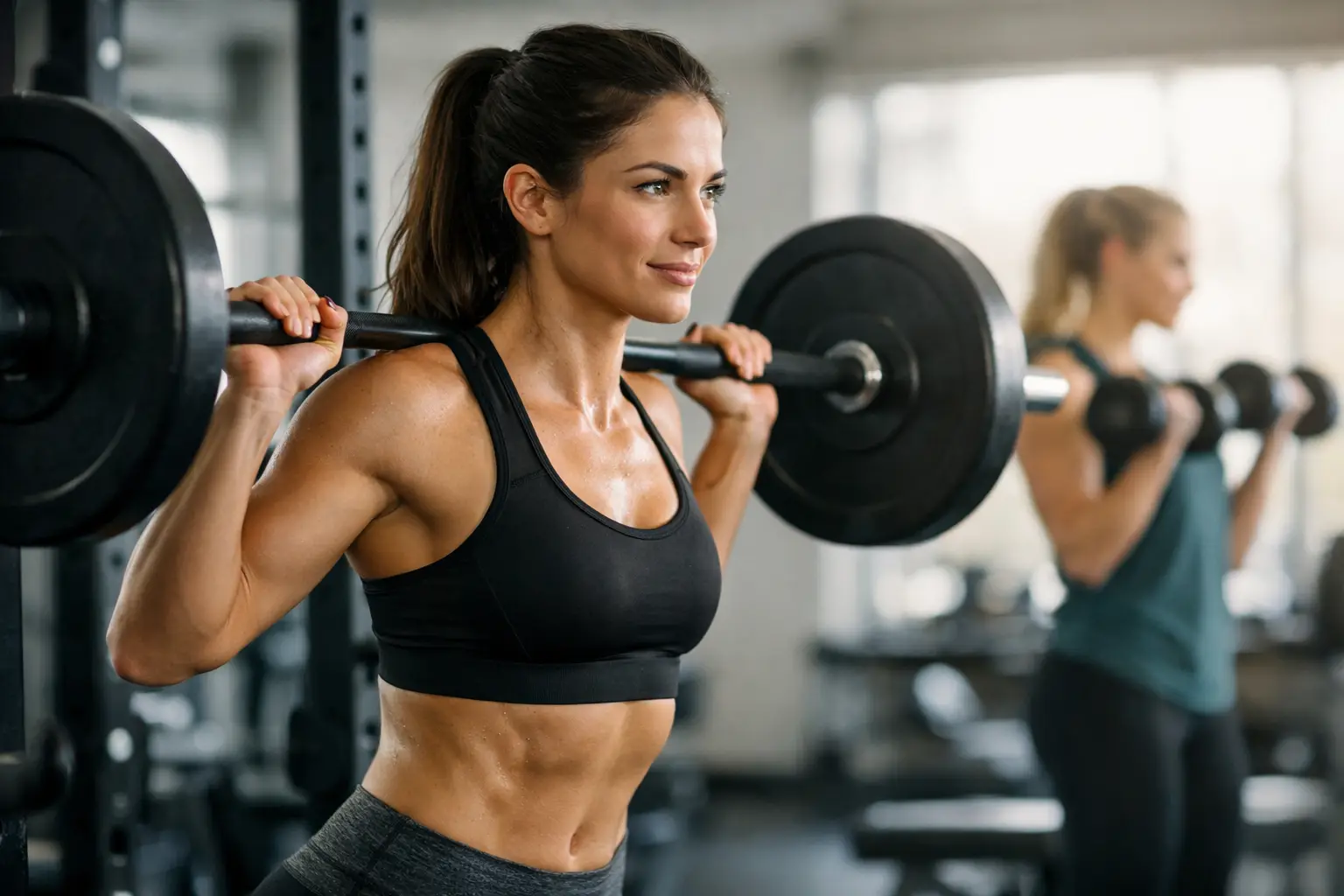
The groceries still need to come in. Your child still wants to be picked up. The workday still asks you to sit, stand, reach, carry, and keep going. Strength training for women is not about chasing a certain look or proving anything in a crowded weight room. It is about feeling capable in the body you live in every day.
At TNT Fitness Studio B, we see strength as a foundation for more confident movement, better posture, stronger core support, and a more active life. Whether you are new to exercise, returning after time away, or ready to move beyond the same cardio routine, strength work can meet you where you are and grow with you.
Why strength matters beyond the workout
A good strength program helps your muscles work together to produce and control movement. That matters when you lift a suitcase, climb stairs, get up from the floor, or spend hours at a desk and want your back and shoulders to feel better at the end of the day.
For women, building strength also supports bone health. Resistance exercise places healthy stress on bones, which encourages them to stay strong over time. This is especially valuable as women age and hormone changes can affect bone density. Strength training is not a replacement for medical care, but it is one practical part of a long-term wellness routine.
There is a mental benefit, too. Learning that you can squat with control, hold a plank longer, or complete a set that once felt intimidating creates evidence that progress is possible. That confidence often carries outside the studio. You may notice it in how you move through your day, how you handle stress, and how willing you are to try something new.
Strength does not have to mean heavy barbells on day one. Pilates, controlled bodyweight work, resistance bands, dumbbells, cables, and functional circuit training can all build meaningful strength when they are coached well and progressed over time.
Strength training for women starts with a realistic plan
The best plan is not the most exhausting one. It is the one you can repeat consistently while still having energy for work, family, sleep, and the rest of your life.
For many beginners, two full-body strength sessions per week is an excellent place to begin. This gives your body time to learn new movement patterns and recover between sessions. If you already exercise regularly, three sessions may be a natural fit. More is not automatically better, particularly if your sleep is inconsistent, your stress is high, or your body is still adapting.
A full-body session should include movements that help you squat, hinge, push, pull, carry, rotate, and stabilize. In simple terms, you might practice a squat variation for your legs, a row for your upper back, a chest press or elevated push-up, a hip hinge such as a deadlift pattern, and core work that teaches you to resist unwanted twisting or arching.
The goal is not to cram every possible exercise into one class. Quality matters. A smaller number of well-coached movements performed with attention will serve you better than rushing through a long list with form that falls apart.
Learn control before chasing intensity
You do not need to leave every workout drenched in sweat to make progress. You do need enough challenge to ask your body to adapt, paired with good technique that keeps the right muscles doing the work.
Start with a load that allows you to move smoothly and maintain control through the full range of motion available to you. The last few repetitions should feel challenging, but you should not need to hold your breath, rush, or change your position just to finish. If your knees cave in during a squat, your shoulders rise toward your ears during a row, or your low back takes over during core work, the exercise likely needs an adjustment.
That adjustment may mean using less weight, reducing the range of motion, slowing down, or choosing a different variation. These are not setbacks. They are smart coaching decisions that help you build strength safely.
Pilates can be especially valuable here because it develops body awareness, core endurance, breathing control, and mobility. Circuit training can then help you apply that control in a more dynamic setting. Together, they create a balanced approach: you learn how to move well, then you practice moving well with greater challenge.
Progress is more than adding weight
Adding weight is one way to progress, but it is not the only way. You can make an exercise more effective by improving your range of motion, adding a repetition, slowing the lowering portion, choosing a more demanding variation, or completing the same work with better control.
For example, a supported squat to a bench may become a bodyweight squat, then a goblet squat with a dumbbell. An incline push-up may become lower over time as your upper-body and core strength improve. A plank may begin with your hands elevated and progress toward a longer, stronger hold on the floor.
Give a movement enough time to work. Changing your entire routine every week may feel exciting, but it can make progress hard to measure. Repeating key patterns for several weeks lets you notice that the same weight feels easier, your balance is steadier, or your recovery improves.
Keep a simple record of what you did and how it felt. You do not need an elaborate spreadsheet. A note on your phone with the exercise, weight, repetitions, and a quick comment can help you see wins that are easy to overlook.
Make recovery part of your training
Strength improves during recovery, not only during the workout. Muscles need time, nourishment, and rest to adapt to the training you give them.
Aim to include protein regularly across your meals, along with carbohydrates that support energy for training and fruits, vegetables, and healthy fats that contribute to overall nutrition. The right amount varies by person, so there is no need to follow restrictive rules or copy someone else’s plan. A sustainable approach you can maintain will do more for you than a short-term reset.
Hydration and sleep matter, too. If you are unusually sore, exhausted, or struggling to complete sessions that normally feel manageable, your body may be asking for more recovery. Light mobility work, an easy walk, or a lower-intensity class can be productive choices on those days.
If you are pregnant, postpartum, managing pelvic floor symptoms, recovering from an injury, or living with a medical condition, get individualized guidance from the appropriate healthcare professional and a qualified coach. Strength training can often be adapted, but the right approach depends on your situation.
Let go of the myths that keep women from starting
One common concern is becoming bulky. Significant muscle size requires a very specific combination of long-term training, nutrition, genetics, and often years of focused effort. Most women who begin a balanced strength program notice improved muscle tone, posture, strength, and confidence rather than suddenly becoming larger than they want to be.
Another myth is that cardio is the only path to fitness or weight loss. Cardio supports heart health and can be a great mood booster, but strength training deserves a place alongside it. Building and maintaining muscle supports everyday function and can help you feel more stable, powerful, and resilient.
You also do not have to be fit before you start. Beginners are not a disruption in a supportive class. They are exactly who thoughtful coaching is designed to help. Every exercise can have an entry point, and every strong person started by learning the basics.
Find coaching and community that keep you moving
A plan on paper can be useful. A coach who notices your form, celebrates your progress, and helps you adjust when life gets busy can make that plan easier to follow. The right fitness community replaces comparison with encouragement and makes showing up feel less like a chore.
At TNT Fitness Studio B, strength, mobility, flexibility, Pilates, and circuit training work together so you can build a routine that supports real life. Start with the movement you can do today, stay patient with the process, and let each well-earned repetition remind you how capable you are.