
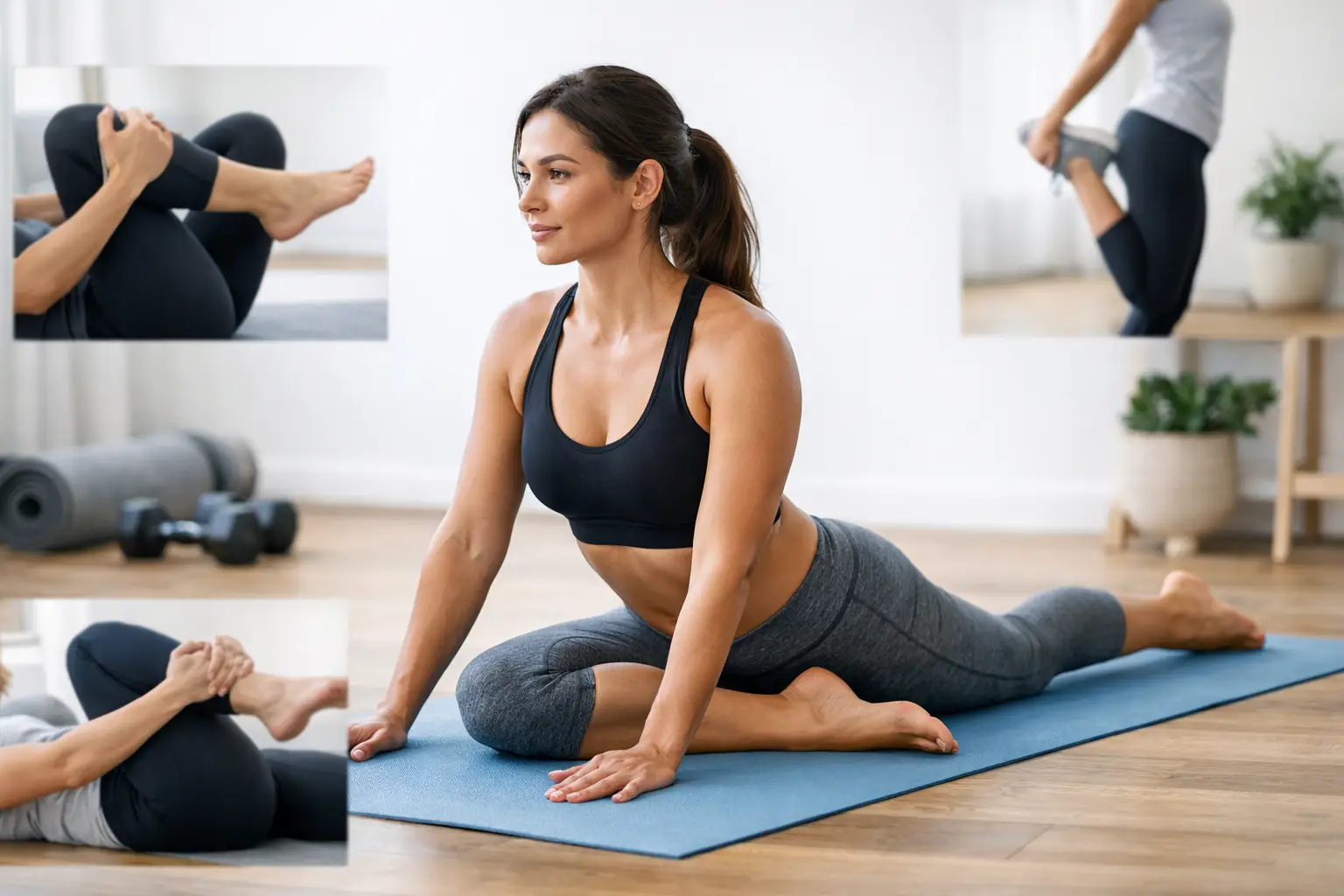
If your hips feel stiff when you stand up from your desk, squat in class, or climb the stairs, you are not imagining it. The best stretches for tight hips can help ease that stuck, pinchy feeling and make everyday movement feel smoother, stronger, and more comfortable.
Tight hips are common, especially if you spend a lot of time sitting, driving, or working out without enough mobility work. They can also show up when your glutes are weak, your core is not doing its share, or your body is compensating for stress and posture habits. That is why stretching helps, but only when you do the right stretches, with good form, and with some consistency.
Why hips get tight in the first place
Your hips do a lot. They help you walk, run, lift, balance, rotate, and stabilize your body. Because they are involved in so many movements, they also tend to hold tension from several directions at once.
For some people, the front of the hips gets tight from sitting for long periods. For others, the outer hips and glutes feel restricted from repetitive workouts, poor recovery, or a lack of strength through a full range of motion. Sometimes what feels like tightness is actually your body protecting an area that feels unstable.
That matters because stretching should not be random. If you only force your body deeper into positions without control, you may get temporary relief but not lasting change. The goal is to create space, improve mobility, and help your body feel safe moving there.
How to get more from the best stretches for tight hips
Before you start, think gentle, not aggressive. You should feel a stretch, but not sharp pain, joint pinching, or numbness. Slow breathing helps a lot here. When you relax your breath, you usually relax some of the muscle guarding too.
Hold each stretch for about 20 to 45 seconds and repeat 1 to 3 rounds per side. If your hips are especially stiff, a short daily routine often works better than one long session once a week. Consistency wins.
1. Half-kneeling hip flexor stretch
This is one of the most effective stretches for the front of the hips, especially if sitting is part of your daily routine.
Start in a half-kneeling position with one knee on the floor and the other foot in front, knee bent at 90 degrees. Tuck your pelvis slightly, as if you are trying to point your belt buckle upward. From there, shift your body forward just enough to feel a stretch in the front of the hip on the kneeling side.
The small pelvic tuck is the key. Without it, many people lean forward and end up stretching very little. You do not need a huge lunge. A controlled position usually feels stronger and safer.
Make it better
Raise the arm on the kneeling side and reach slightly overhead. That can increase the stretch through the front of the hip and torso.
2. Figure four stretch
If your hips feel tight in the outer glutes or deep in the back of the hip, this one is a go-to.
Lie on your back with both knees bent. Cross one ankle over the opposite thigh, just above the knee, making a figure four shape. Stay there if you already feel a stretch, or gently pull the uncrossed leg toward your chest.
You should feel this in the glute and outer hip of the crossed leg. If you feel strain in the knee, back off and focus on keeping the foot flexed. This stretch is especially helpful for people who feel stiff after leg day, long car rides, or too much sitting.
3. 90-90 hip stretch
This stretch works both internal and external rotation, which is a big deal for overall hip mobility. It is also a good reality check. Many active adults have decent flexibility in one direction but very limited control in another.
Sit on the floor with one leg in front of you bent at 90 degrees and the other leg behind you, also bent at 90 degrees. Keep your chest tall and hips as level as possible. Lean slightly over the front leg to feel more stretch in the outer hip. Then come upright and notice the position of the back hip too.
This one can feel intense at first. If sitting fully upright is hard, place your hands on the floor for support or sit on a folded towel. The goal is not to force the shape. It is to gradually own it.
4. Butterfly stretch
The butterfly stretch is simple, but when done well, it can open the inner thighs and groin area that often contribute to tight, restricted hips.
Sit tall and bring the soles of your feet together, letting your knees fall out to the sides. Hold your feet or ankles and think about lengthening your spine rather than collapsing forward. A slight hinge from the hips is enough.
A common mistake is bouncing the knees or pulling yourself down too aggressively. Slow and steady is more effective. If your knees are very high off the floor, that is okay. Mobility improves over time.
5. Pigeon stretch
Pigeon can be a great stretch for the outer hip and glutes, but it is not the best choice for every body. If your knee feels stressed or your hip feels jammed, skip it and stick with figure four instead.
From a hands-and-knees position, bring one knee forward and place it behind your wrist area, with your shin angled comfortably. Extend the other leg behind you. Keep your hips as square as you can and stay upright, or lower down to your forearms if that feels good.
There is no prize for getting your front shin parallel to the mat. For many people, that setup is too aggressive. Comfort and alignment matter more than looking advanced.
6. Happy baby
This stretch helps open the hips while also giving your lower back a chance to relax.
Lie on your back and bring your knees toward your chest. Reach for the outsides of your feet, ankles, or shins. Gently draw your knees down toward your armpits while keeping your tailbone heavy on the floor.
Happy baby tends to feel good after strength training, long walks, or a busy day when your whole body feels compressed. If reaching your feet is not realistic, hold behind the thighs instead.
7. Lizard stretch
Lizard targets the hip flexors, groin, and inner thigh, making it useful if your hips feel tight from multiple angles.
Start in a runner’s lunge with both hands inside your front foot. Let your back leg stay long and active. From there, you can keep your hands on the floor or lower to your forearms if your mobility allows.
This stretch can be intense, so it is one to approach with patience. If your breathing gets shallow or your shoulders tense up, come out a bit. More depth is not always more benefit.
8. Supine twist with bent knee
Hip tightness is not always only about the hips. The low back, glutes, and side body can all contribute. A gentle twist can help reduce overall tension and leave your hips feeling less guarded.
Lie on your back with one knee pulled in toward your chest. Guide that knee across your body while keeping your shoulders grounded. Extend the opposite arm out to the side and breathe into the stretch.
This one should feel smooth and relieving, not forced. It is a nice way to finish your mobility work, especially at the end of the day.
When stretching is not enough
If your hips always feel tight no matter how much you stretch, your body may need strength and stability just as much as flexibility. That is common. Tight hip flexors often show up alongside weak glutes, limited core control, or poor movement patterns during squats, lunges, and daily tasks.
That is why a balanced plan works best. Stretching helps restore space. Strength training helps you use that space. Controlled movement helps you keep it.
In a well-structured Pilates or circuit training program, for example, hip mobility improves because you are not only lengthening muscles. You are also building support around the pelvis, core, and glutes. That combination usually leads to better posture, stronger workouts, and fewer aches during daily life.
How often should you stretch tight hips?
If you are dealing with mild stiffness, 5 to 10 minutes a day can make a real difference. A short mobility reset in the morning or after workouts is often enough to help your hips feel more open.
If your tightness is more stubborn, you may need a little more strategy. Stretch after a light warm-up, pair mobility with strength work, and notice what activities make your hips feel worse or better. Sitting all day and then doing one deep stretch at night may not fully solve the issue.
There is also a recovery factor. Poor sleep, high stress, and too much training intensity can all make your body feel tighter. It depends on the whole picture, not just one muscle group.
A simple routine you can actually stick with
If you want a practical place to start, choose four movements: the half-kneeling hip flexor stretch, figure four, 90-90, and happy baby. That gives you front hip, outer hip, rotation, and general release. Hold each for 30 seconds per side, breathe slowly, and repeat for 1 to 2 rounds.
That kind of routine is realistic enough to do consistently, which is what matters most. At TNT Fitness Studio B, we see the best results when people stop treating mobility as an afterthought and start building it into their weekly rhythm.
Your hips do not need extreme stretching. They need attention, consistency, and the right mix of mobility and strength. Start where you are, move with control, and let progress build from there.