If traditional workouts have ever left you feeling lost, sore in the wrong places, or unsure whether you were doing anything that actually helps real life, functional fitness for beginners is often the missing piece. It trains your body for the way you actually move – getting up from the floor, carrying groceries, climbing stairs, reaching overhead, and staying steady and strong through it all.
That matters more than most people realize. A lot of beginners think fitness has to start with intense bootcamps, complicated machines, or chasing calorie burn. In reality, the best starting point is usually simpler. You want movement that builds strength, improves mobility, supports posture, and helps you feel more capable in your own body.
What functional fitness for beginners really means
Functional fitness focuses on movement patterns instead of isolated muscles alone. Rather than thinking only about biceps or abs, you train actions like squatting, hinging, pushing, pulling, rotating, balancing, and carrying. Those patterns show up in everyday life, so when you improve them in a workout, you improve more than your workout.
For beginners, this approach is especially helpful because it creates a strong foundation. You are not just exercising to get tired. You are teaching your body to move well under control. That can mean better balance, stronger core support, less stiffness, and more confidence doing daily tasks.
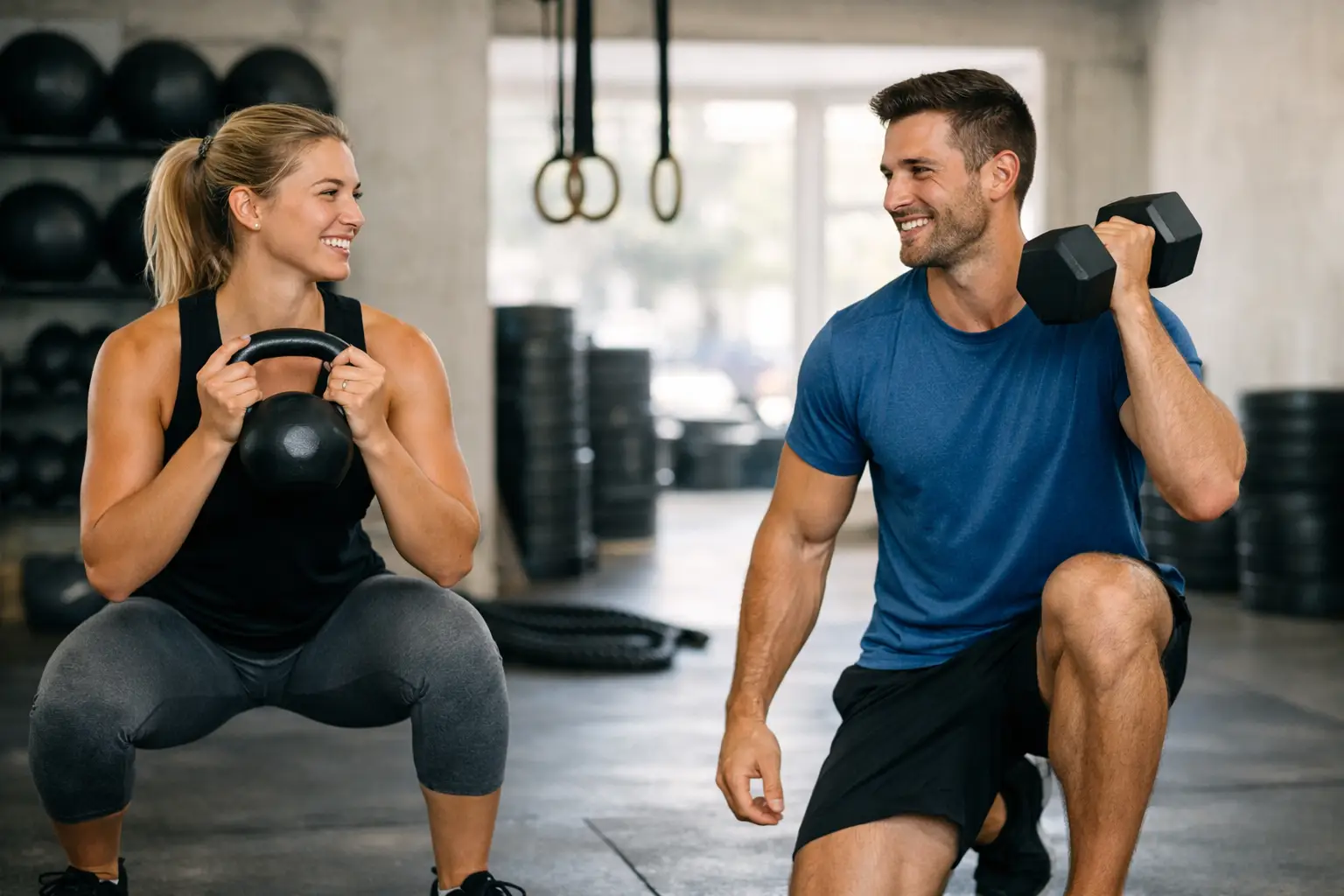
It is also one of the most approachable ways to begin. Functional training does not have to be high impact or highly athletic. In a supportive studio setting, it can look like bodyweight squats to a bench, light resistance work, controlled core exercises, mobility drills, and circuit training that keeps you engaged without overwhelming you.
Why beginners do better with function-first training
Many people start a fitness routine with good intentions and quit because the experience feels punishing. The workout is too hard, the environment is too intimidating, or the plan has no connection to their actual goals. If your goal is to move better, feel stronger, and build habits you can keep, function-first training makes more sense.
It gives you early wins you can feel. Your posture improves. Your hips and shoulders loosen up. You notice stairs feel easier. You can sit, stand, lift, and walk with more control. Those changes build motivation because they show up outside the gym.
This style of training also respects the fact that every beginner starts from a different place. Some people are returning after years away from exercise. Others already walk regularly or used to play sports. Some have tight hips, weak core stability, or low back discomfort. A good functional program meets you where you are and helps you progress safely.
That is one reason Pilates, mobility work, and circuit training pair so well with functional fitness. They train alignment, coordination, core control, and total-body strength without forcing you into an all-or-nothing approach.
The key areas to focus on first
When people hear functional training, they sometimes assume they need to learn advanced exercises right away. You do not. The first phase should feel steady and manageable.
Mobility comes before intensity
If your joints do not move well, strength work becomes harder and often less comfortable. Beginners usually benefit from improving ankle mobility, hip mobility, thoracic spine rotation, and shoulder range of motion. That does not mean stretching for an hour. It means using focused movement prep so your body can get into good positions.
For example, a squat becomes much more useful when your ankles and hips allow you to lower with control. Overhead pressing feels better when your upper back and shoulders can move well. Mobility is not extra credit. It helps everything else work better.
Core stability matters more than visible abs
A strong core is about support, not just appearance. It helps you maintain posture, protect your spine, transfer force, and move with control. Beginners often make faster progress when they learn how to brace, breathe, and stabilize before adding speed or heavier resistance.
This is where Pilates-based training can be especially valuable. It teaches body awareness in a way that carries over to strength work, daily movement, and even how you sit and stand throughout the day.
Strength should feel challenging, not chaotic
You do not need heavy barbells on day one. You need quality reps. Sit-to-stands, supported lunges, rows, carries, glute bridges, step-ups, and controlled presses all build useful strength. Over time, resistance can increase. In the beginning, consistency and technique matter more.
There is a trade-off here. If workouts stay too easy forever, progress stalls. If they get too intense too fast, confidence drops and recovery becomes harder. The right middle ground is challenge with support.
How to start functional fitness without overthinking it
The best beginner plan is one you can repeat. That usually means two to four workouts a week, with enough variety to keep things interesting and enough structure to build skill.
A simple weekly approach to functional fitness for beginners
A balanced week might include two strength-based sessions, one mobility-focused session, and one low-impact conditioning session. If four days feels like too much, start with two. Done consistently, two well-designed sessions will beat an ambitious plan you abandon after ten days.
In each workout, aim to include a warm-up, a few foundational movement patterns, some core work, and a short finish that builds stamina without wrecking you. Circuit training works well here because it keeps you moving while giving you exposure to multiple skills in one session.
If you are brand new, coaching can make a big difference. A trainer or class instructor can help you adjust form, choose the right level, and build trust in your body. That support often shortens the learning curve and makes the process feel less intimidating.
What beginners often get wrong
One common mistake is thinking soreness equals success. A good workout should challenge you, but it should also leave you able to come back again. Progress comes from repeating quality movement over time, not from proving how hard you can go once.
Another mistake is skipping mobility and recovery because they seem less exciting than strength work. But tight hips, stiff shoulders, and poor control tend to show up quickly when you ignore those basics. Recovery does not mean doing nothing. It means giving your body what it needs to adapt.
There is also the temptation to compare your starting point to someone else’s middle. That mindset can make functional training seem too basic or too slow. It is neither. When done well, it is one of the smartest ways to build a body that feels strong, capable, and resilient.
What results can you expect?
Beginners often notice subtle but meaningful changes first. You may stand taller, feel less stiff in the morning, or realize your balance has improved. Then the bigger wins start stacking up. You carry more with less strain. You move through workouts with better control. Your core feels more engaged. Your confidence grows because your body feels more reliable.
Fat loss or muscle tone may happen too, depending on your nutrition, workout frequency, sleep, and overall routine. But the bigger advantage of functional training is that it improves the quality of how you move and feel. That tends to support long-term results better than short bursts of extreme effort.
It also scales well. What starts with bodyweight and light resistance can evolve into stronger circuits, more advanced Pilates progressions, improved athletic performance, or personal training goals tailored to your lifestyle.
The value of training in a supportive community
Starting alone can work, but many beginners do better in an environment where guidance and accountability are built in. That is especially true if you have felt uncomfortable in large gyms or unsure about where to begin. A studio setting with expert coaching can help you focus on the right things from day one.
At TNT Fitness Studio B, that means helping people build strength, mobility, and flexibility in a way that feels sustainable, not extreme. It means learning movement patterns that support everyday life, with coaching that meets you where you are and a community that wants to see you win.
That kind of support matters because fitness is not just about a single class or one motivated week. It is about creating a rhythm you can stay with. When your workouts feel purposeful and your progress feels personal, consistency gets easier.
If you are curious but hesitant, that is normal. You do not need to feel ready for everything. You just need a place to begin. Start with movement that helps your life feel better, not harder, and let your confidence grow from there.