
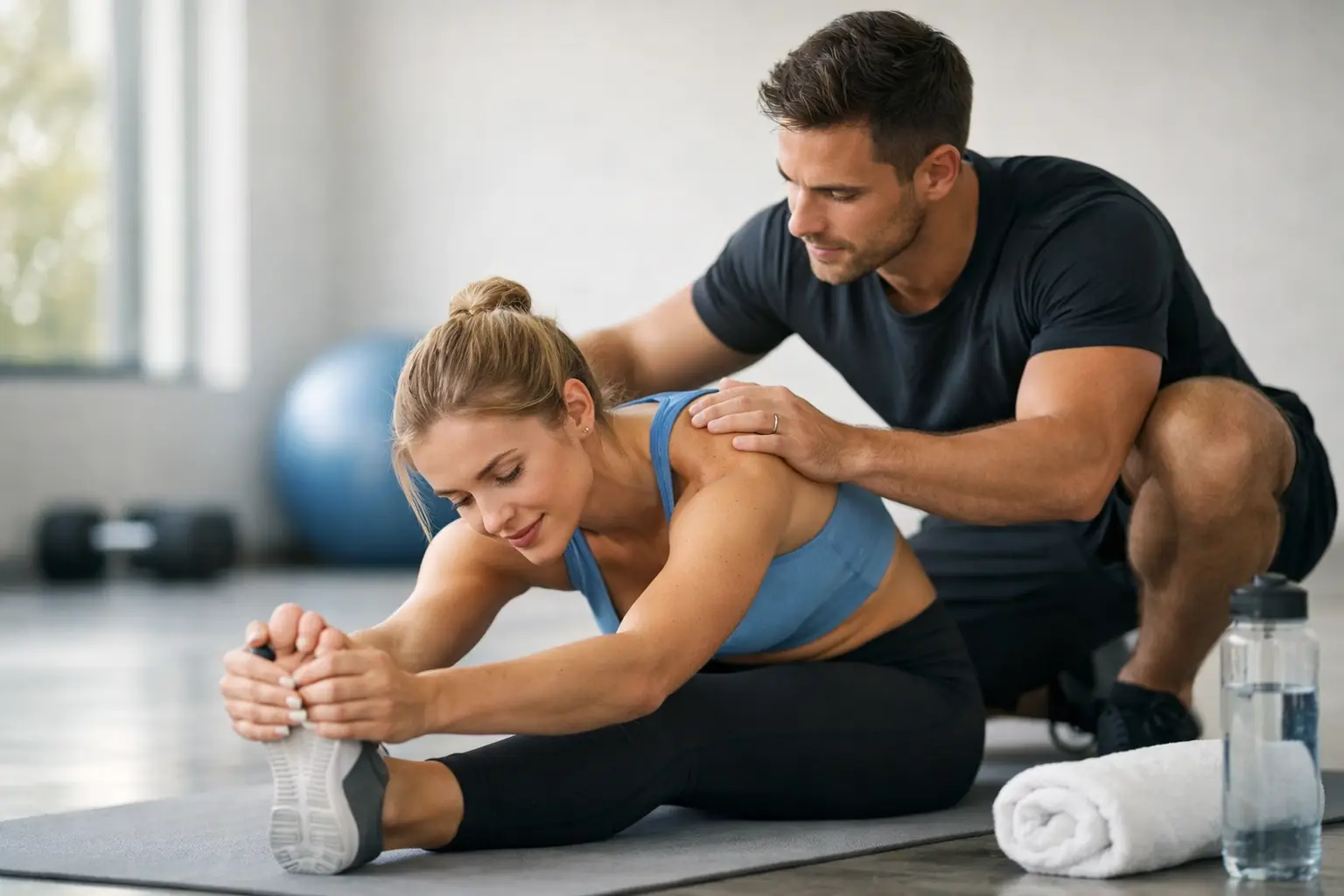
If your hamstrings feel tight every time you bend down, or your shoulders complain after a long workday, you are not alone. A lot of people want to know how to improve flexibility safely, but the real goal is not forcing bigger stretches. It is helping your body move better, recover better, and feel more comfortable in daily life.
That distinction matters. Flexibility is often treated like a quick win – stretch more, get looser, move on. In reality, your body responds best to consistency, control, and patience. When you approach mobility work with the same care you would use for strength training, you are much more likely to make progress without ending up sore, strained, or frustrated.
What flexibility actually means
Flexibility is your muscles and connective tissues allowing a joint to move through a range of motion. Mobility is your ability to control that motion. You need both. Being able to drop into a deep stretch is not especially useful if you cannot stabilize your body there.
That is why safe flexibility work usually includes more than static stretching. It often combines movement prep, strength, posture awareness, breathing, and recovery. For many adults, especially those balancing work, family, and inconsistent exercise schedules, stiffness is not just about short muscles. It can also come from stress, too much sitting, poor movement patterns, or training hard without enough recovery.
How to improve flexibility safely without pushing too far
The safest way to improve flexibility is to stop chasing intensity and start chasing quality. Stretching should create mild to moderate tension, not sharp pain, joint pressure, tingling, or a sense that something is being yanked. If it feels aggressive, it is probably too much.
A good rule is this: you should be able to breathe normally during a stretch. If you are holding your breath, clenching your jaw, or counting the seconds until it is over, your body is more likely to resist than release. Your nervous system plays a big role here. When you feel safe and in control, your body is more willing to allow more range.
Progress also depends on your starting point. A former athlete returning to training may respond quickly. Someone with years of desk work, low back tension, and limited hip movement may need a slower build. Neither is failing. Flexibility is highly individual, and safe progress is rarely dramatic from week to week.
Start with a warm body, not a cold stretch
Cold stretching tends to feel worse and produce less useful results. Before deeper flexibility work, spend five to ten minutes getting your body warm. A brisk walk, easy cycling, bodyweight squats, cat-cow, arm circles, and light lunges all work well.
Once your temperature is up and your joints are moving, stretching usually feels smoother and more productive. This is one reason people often enjoy flexibility training more at the end of a workout or after a movement-based class like Pilates.
Use dynamic movement before workouts
Before strength training or circuit training, dynamic stretches are usually the better choice. These are active, controlled movements that take your joints through range without long holds. Think leg swings, hip circles, walking lunges with rotation, or shoulder openers.
Dynamic work prepares muscles to produce force while improving body awareness. It is especially helpful if you want better movement quality during squats, presses, rowing, or core work. Long static stretching before high-effort exercise can sometimes reduce power temporarily, so timing matters.
Save longer holds for after training or recovery days
Static stretching still has a place. Holding a stretch for 20 to 45 seconds after a workout, or on a recovery-focused day, can help improve tolerance to range of motion over time. The key is to stay gentle and repeat consistently.
You do not need an hour-long routine. Even 10 to 15 focused minutes a few times per week can make a real difference. For most adults, hips, hamstrings, calves, chest, upper back, and shoulders are smart places to begin because those areas commonly get tight from sitting and screen time.
Strength makes flexibility safer
One of the biggest mistakes people make is trying to become flexible without getting stronger. If your body gains range of motion but has no control there, that new range may feel unstable instead of useful.
This is where strength training and Pilates can be especially effective. Controlled resistance work teaches your muscles to support your joints through fuller ranges of motion. Pilates adds core stability, posture awareness, and precise movement patterns that help you use that flexibility in a balanced way.
For example, improving hip flexibility is helpful. Improving hip flexibility while also strengthening your glutes and core is even better. The same goes for the shoulders. Better overhead range matters, but it matters more when your upper back and shoulder stabilizers can support it.
Focus on the areas that affect daily life most
If your goal is practical, lasting improvement, start with the regions that influence posture and movement every day. Tight hips can affect your low back and knees. A stiff upper back can limit shoulder movement and contribute to neck tension. Restricted calves and ankles can change how you walk, squat, and climb stairs.
This is also why random internet stretch routines are hit or miss. What helps one person may irritate another. If you have chronic pain, prior injuries, or joint instability, individualized coaching matters. The safest plan is the one that fits your body, not the one that looks impressive online.
Recovery habits that support better flexibility
Flexibility gains do not only happen during stretching. They also depend on how well your body recovers. If you are constantly stressed, under-slept, dehydrated, or sore from every workout, your muscles may stay guarded.
Sleep is a major factor. When recovery is poor, everything feels tighter. Hydration helps tissue function, though it is not a magic cure for stiffness. Nutrition also plays a role because underfueling can make training quality worse and recovery slower.
The simplest habit may be the most overlooked: move more often throughout the day. Standing up, walking, changing positions, and breaking up long periods of sitting can reduce the baseline stiffness that makes stretching feel harder than it should.
Signs you are doing too much
A little soreness can happen when you start something new, but flexibility work should not leave you feeling injured. Back off if you notice lingering joint pain, sharp pulling sensations, numbness, or a steady loss of strength after stretching.
It is also worth paying attention to how a stretch feels during and after. If a move gives you temporary range but leaves you more irritated later, it may not be the right choice right now. Safer progress usually feels boring in the best way – steady, manageable, and repeatable.
A realistic weekly approach
If you want results without overcomplicating the process, aim for short, regular sessions instead of occasional marathon stretching. Two to four days a week is enough for many people to notice progress. Pair dynamic mobility with your workouts, then add brief static stretching after training or on separate recovery days.
This kind of balanced routine tends to work well because it respects how real life operates. You do not need perfect consistency. You need enough repetition for your body to trust the pattern. That is often where people in supportive studio settings do especially well. A coached environment helps you stay accountable, adjust technique, and build flexibility alongside strength rather than treating it like an afterthought.
At TNT Fitness Studio B, that blend of mobility, core work, strength, and encouragement is a big part of why members see sustainable progress. The body responds well when it is challenged with care.
When professional guidance is the smart move
If you have ongoing pain, a recent injury, hypermobility, or a history of always feeling tight no matter how much you stretch, it may be time for expert help. Sometimes what feels like a flexibility problem is actually a stability issue, a posture issue, or a movement pattern that needs correction.
Good coaching can help you identify what to stretch, what to strengthen, and what to leave alone for now. That saves time, lowers injury risk, and often gets better results than trying to fix everything at once.
Improving flexibility safely is less about pushing your body harder and more about working with it consistently. Give your body warmth, control, recovery, and time. Small improvements add up, and the payoff shows up where it matters most – standing taller, moving easier, and feeling more confident every time you train.