Starting a new workout routine can feel awkward fast. You walk into a class, everyone else seems to know the moves, and suddenly you are wondering if you should have chosen something easier. If you have been asking, is pilates good for beginners, the short answer is yes. For many people, it is one of the smartest places to start because it builds strength, control, and body awareness without throwing you into high-impact training on day one.
What makes Pilates especially helpful for beginners is that it meets you where you are. You do not need to be flexible, athletic, or already in shape to begin. In fact, many people start Pilates because they want to improve posture, move with less stiffness, strengthen their core, and build confidence before trying more intense workouts.
Is Pilates Good for Beginners or Too Advanced?
Pilates has a reputation for looking precise, and sometimes that makes it seem more advanced than it really is. The truth is that good Pilates instruction is built on progressions. That means a movement can be simplified, slowed down, or supported so a beginner can learn it safely.
That said, not every class feels the same. A fast-paced reformer class with little instruction may feel overwhelming if you are brand new. A beginner-focused mat or reformer class with coaching, cueing, and attention to form usually feels much more approachable. So if you are wondering whether Pilates is beginner-friendly, the better answer is this: yes, when the class is taught with beginners in mind.
This matters because Pilates is less about keeping up and more about learning how to move well. You are not chasing the heaviest weight or the highest heart rate. You are learning alignment, breathing, control, and stability. Those skills carry over into everyday life, whether you are sitting at a desk, carrying groceries, chasing kids, or getting back into exercise after a long break.
Why Pilates Works So Well for First-Time Exercisers
One of the biggest reasons beginners stick with Pilates is that it feels challenging without feeling punishing. You can get a serious workout while still being kind to your joints. For adults who want long-term wellness instead of extreme fitness culture, that is a big win.
Pilates focuses heavily on core strength, but not in the narrow, six-pack sense. It trains the muscles that support your spine, pelvis, hips, and posture. That foundation can help you feel stronger during other workouts and more stable during daily movement. Many beginners notice that they stand taller, feel less tight through the hips and back, and move with more control after just a few weeks of consistent practice.
It also improves mobility and flexibility in a balanced way. Instead of forcing big stretches, Pilates helps you build strength through range of motion. That combination is important. Flexibility without strength can leave you feeling loose but unstable. Strength without mobility can leave you feeling strong but stiff. Pilates works in the middle, which is often exactly where beginners need to be.
Another benefit is mental. Beginners often do better with exercise when they can feel progress early. Pilates gives you that. Even before dramatic physical changes show up, you may notice better balance, stronger posture, improved coordination, and a clearer connection to how your body moves.
What Beginners Can Expect in a Pilates Class
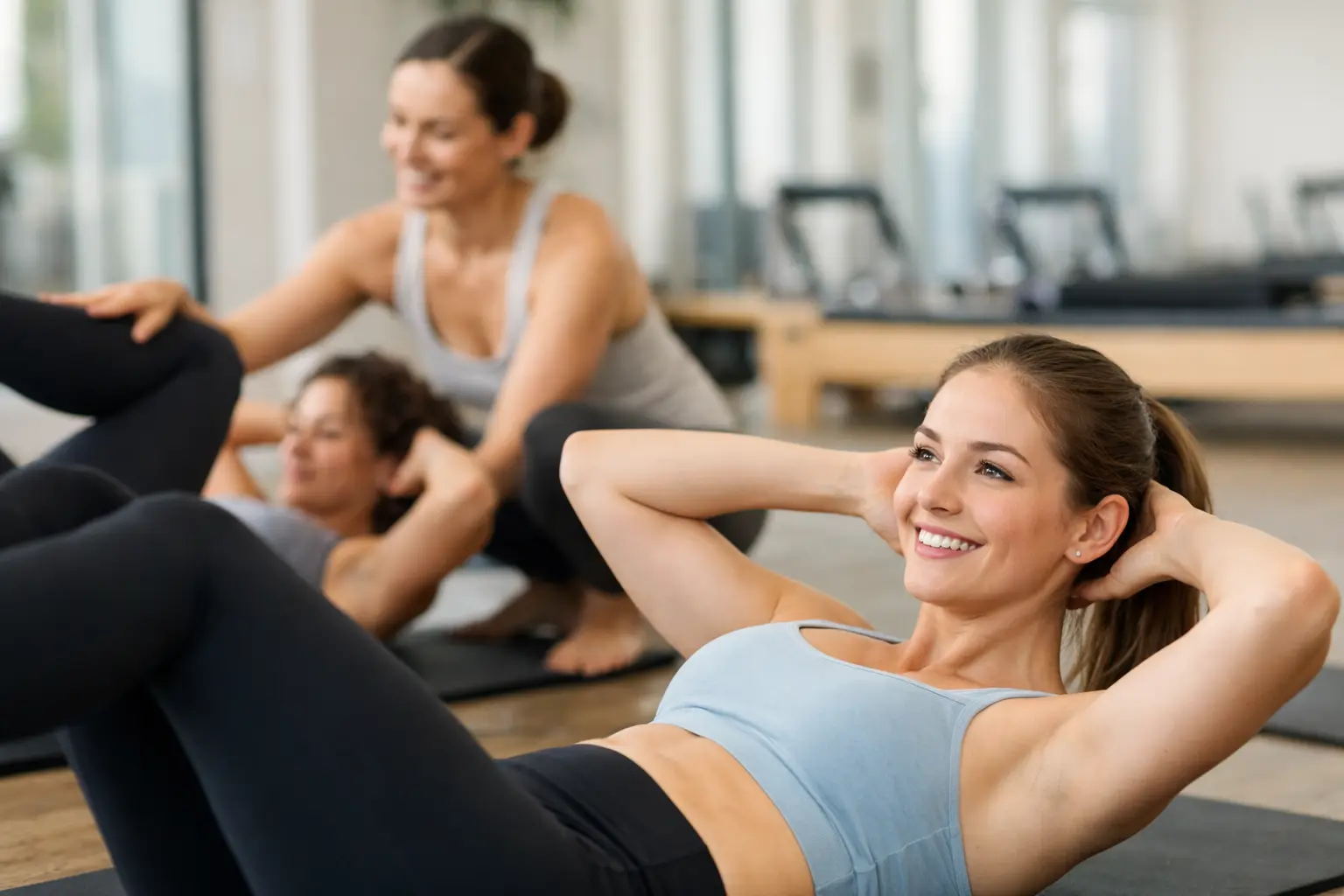
If you have never taken a class before, it helps to know what you are walking into. Most beginner Pilates classes focus on form, breathing, and controlled movement patterns. You might do exercises lying on your back, side, hands and knees, or standing, depending on the format.
In a mat class, your body weight and small props may provide resistance. In a reformer class, the machine adds springs and structure that can either support or challenge you. Neither option is automatically better for beginners. It depends on the coaching and your comfort level. Some beginners love the support of the reformer. Others prefer starting on the mat to learn the basics.
You should expect the movements to look smaller than in many workouts. That does not mean they are easy. Pilates is often more intense than it appears because you are working with precision. A small leg movement can light up your core when done correctly. A slow bridge can challenge your glutes and hamstrings more than a rushed set of reps ever would.
You should also expect instruction around breathing. That can feel unfamiliar at first, but it is part of what makes Pilates so effective. Breathing helps you stay connected to your core, move with control, and avoid unnecessary tension in your neck and shoulders.
Common Beginner Concerns
A lot of people put off trying Pilates because they think they need to be flexible first. You do not. Flexibility is something you can improve through practice. The same goes for coordination. Nobody walks into their first class already knowing the language or the rhythm.
Another common concern is whether Pilates is hard. The honest answer is yes, it can be challenging, but it is usually challenging in a productive way. You may feel muscles working that you have not connected with in a while. You may need to slow down and focus. That is normal. Good instruction makes that challenge feel manageable, not discouraging.
Some beginners also wonder whether Pilates is enough on its own. It depends on your goals. If your main priorities are better core strength, mobility, posture, flexibility, and low-impact conditioning, Pilates can absolutely be a strong foundation. If you also want to build heavier strength or higher cardiovascular endurance, Pilates works very well alongside walking, strength training, or circuit classes.
How to Start Pilates With Confidence
If you want your first experience to go well, choose a setting where coaching matters. A supportive studio environment can make a huge difference, especially if you are nervous or returning to exercise after time away. Clear instruction, movement modifications, and trainers who actually watch your form help you learn faster and feel safer.
It also helps to let your instructor know you are new. That is not something to hide. In fact, it gives your coach a chance to offer cues and adjustments that make class more effective. Most beginners do not need to do more. They need to do the basics better.
Wear comfortable clothes you can move in, arrive a few minutes early, and give yourself permission not to be perfect. Pilates rewards consistency more than intensity. If your first class feels unfamiliar, that does not mean it is not for you. It usually means you are learning.
Is Pilates Good for Beginners With Pain or Limitations?
This is where a little nuance matters. Pilates can be a great option for beginners with tight hips, low back discomfort, poor posture, or a history of inconsistent exercise because it is low impact and highly adjustable. But low impact does not mean one-size-fits-all.
If you have an injury, severe pain, or a medical condition, you should choose a class with qualified coaching and communicate clearly about what you are dealing with. Certain exercises may need to be modified or avoided. Done well, Pilates can support better movement patterns and stability. Done carelessly, it can still be frustrating or too much.
That is why personalized support matters so much. In a community-focused studio, beginners tend to make faster progress because they are not left guessing. They get structure, feedback, and encouragement that helps them stay consistent.
At TNT Fitness Studio B, that beginner-friendly support is a big part of the experience. The goal is not to throw you into a workout and hope you figure it out. It is to help you build strength, mobility, and confidence step by step so fitness feels sustainable.
The Real Reason Beginners Stay With Pilates
Most people do not quit exercise because they are lazy. They quit because the plan feels too painful, too confusing, or too disconnected from real life. Pilates works for beginners because it feels useful. It helps you move better in ways you can actually notice.
When getting out of a chair feels easier, when your back feels less cranky at the end of the day, when your balance improves, and when your core feels stronger during everyday movement, that is motivating. You are not just working out. You are building a body that supports your life better.
If you have been waiting until you feel fitter, leaner, or more coordinated to try Pilates, this is your sign to stop waiting. Beginners do not need a perfect starting point. They need a smart one. Pilates can be exactly that, especially when you start in a place that values coaching, progress, and community as much as the workout itself.
The best first step is not finding the hardest class. It is finding the right support, showing up, and letting steady practice do what quick fixes never can.