You can feel the difference between being in a crowded class and being truly coached within the first few minutes. That is one of the biggest small group fitness benefits. Instead of wondering if your form is right or whether the workout fits your body, you get real guidance, real feedback, and real support from people who actually know your name.
For many adults, that changes everything. Big gyms can be motivating for some people, but they can also feel impersonal, confusing, or easy to drift away from. Small group training offers a middle ground that works especially well if you want structure, accountability, and a workout experience that supports long-term progress instead of quick burnout.
Why small group fitness benefits stand out
Small group fitness works because it blends professional coaching with the energy of a group. You are not left alone to figure things out, but you also are not paying for one-on-one sessions every time you train. That balance matters for busy adults who want expert direction and steady results without feeling overwhelmed.
In a smaller class setting, instructors can pay attention to movement quality, pacing, and modifications. That is especially valuable if your goals include building strength, improving mobility, increasing flexibility, or moving with better control in everyday life. It is also helpful if you are coming back after time away from exercise and need a little more support as you rebuild confidence.
Of course, small group fitness is not magic. Results still depend on consistency, effort, recovery, and choosing a class style that matches your needs. But when the environment is right, it becomes much easier to stay committed.
1. You get more coaching without the pressure of one-on-one training
One of the clearest advantages of smaller classes is access to coaching. In a large room with dozens of people, even a great instructor has limits. In a small group, there is more room for correction, encouragement, and personalization.
That can mean adjusting your squat depth, helping you find better core engagement, or offering a lower-impact option that protects your joints while still challenging you. Those moments matter. Better form can help you train more effectively, reduce unnecessary strain, and build confidence in movements that once felt intimidating.
For beginners, this kind of support often removes the fear of doing it wrong. For experienced exercisers, it can sharpen technique and help break through plateaus. Either way, you are not just exercising. You are learning how to move better.
2. Accountability feels stronger when people notice you
It is much easier to skip a workout when nobody expects you. In a small group setting, your coach notices when you show up, and often, your classmates do too. That creates a kind of accountability that feels supportive rather than harsh.
This matters because motivation is not always dependable. Some days you feel ready to train, and some days you do not. A class environment where people know you and encourage you can carry you through the days when your energy is low or your schedule feels packed.
That sense of accountability often leads to one of the most practical small group fitness benefits – consistency. And consistency is usually what drives changes in strength, stamina, posture, mobility, and body composition over time.
3. The community helps people stick with fitness longer
A workout can be challenging and still feel welcoming. That is the sweet spot many people are looking for, especially if they have felt out of place in traditional gym spaces.
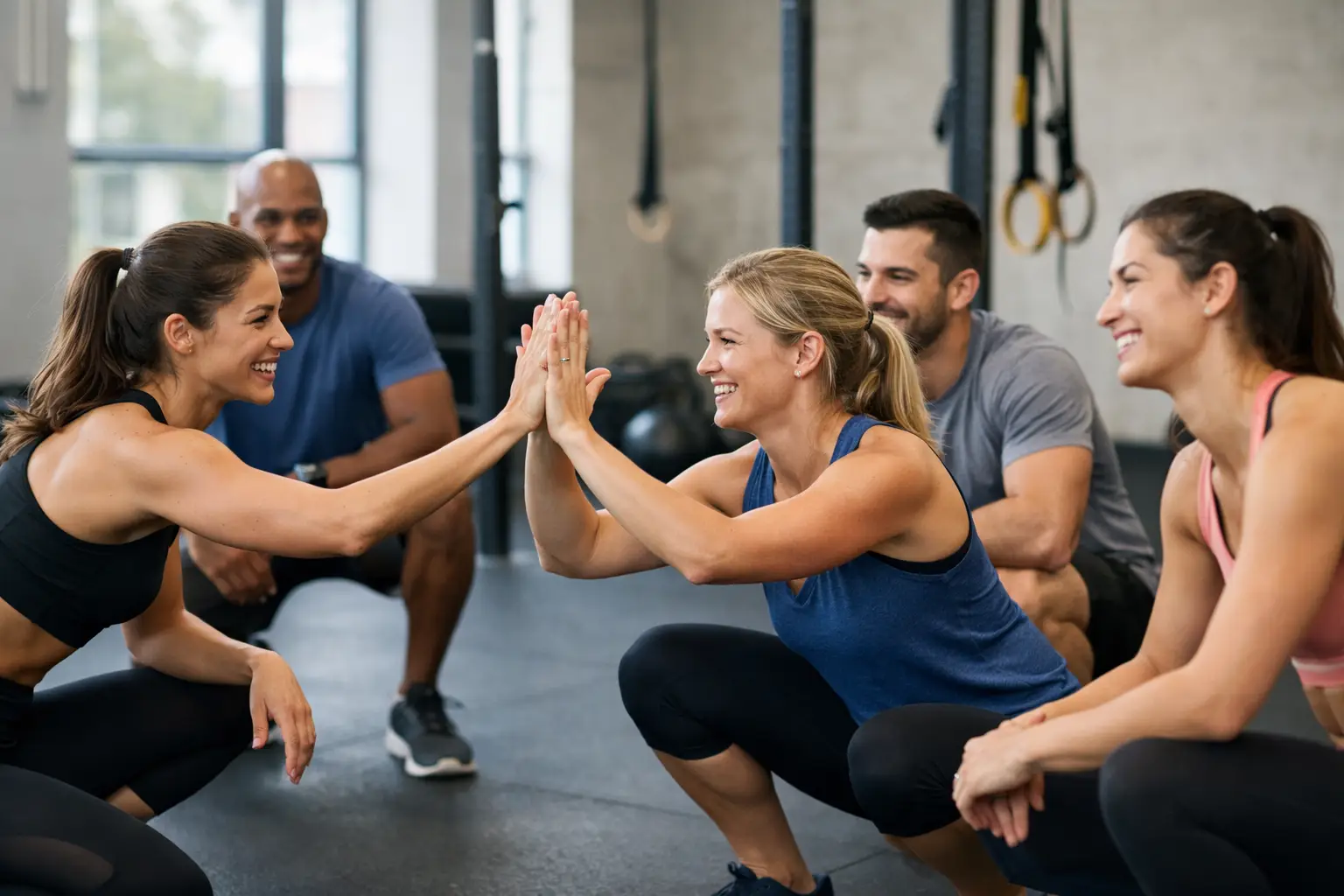
Small group training often builds community faster because people interact more naturally. You see familiar faces. You celebrate progress together. You realize other people are also working through stiff hips, weak core muscles, low energy, or the challenge of making time for themselves.
That shared experience can make fitness feel less like punishment and more like support. It also shifts the focus away from comparison. In the right environment, people are not there to prove something. They are there to improve something.
For adults who want a sustainable routine, that emotional piece matters more than people sometimes admit. If you feel comfortable in a space, you are more likely to return. If you return, you are more likely to improve.
4. Workouts are easier to scale for different fitness levels
One reason people hesitate to join classes is the fear that they will be too advanced or too basic. Small groups solve that better than most formats because coaches have more flexibility to adjust on the spot.
If you are new to fitness, you may need slower pacing, extra cueing, or simpler movement options. If you have more experience, you may need added resistance, more challenge, or tighter performance coaching. In a smaller class, both can happen at once.
This is especially useful in formats like Pilates and circuit training, where exercises can be modified in multiple ways. A good coach can help one person focus on alignment and stability while helping another increase intensity and control. Everyone is working, but not everyone is forced into the same version of the workout.
That approach supports safer progress. It also keeps people from feeling left behind or held back, which is a big reason many members stay committed.
5. Small group fitness benefits include better movement quality
A lot of people start exercising because they want to lose weight or get stronger. Those are valid goals, but better movement quality is often the result that changes daily life the most.
When you train in a smaller group, there is more attention on how you move, not just how hard you move. That can improve posture, balance, core stability, joint control, and flexibility. It can also help you notice patterns like tight shoulders, limited hip mobility, or poor breathing mechanics that affect both workouts and everyday function.
This is where low-impact, form-focused classes can be especially powerful. You do not need to leave every session exhausted to make progress. Sometimes the biggest win is learning how to move with more control, less tension, and better alignment.
For people who sit at desks, manage stress, carry kids, commute, or simply feel stiff and disconnected in their bodies, that benefit is not small at all. It can improve how you stand, walk, lift, reach, and recover.
6. The structure saves mental energy
Many people are not struggling because they do not care about fitness. They are struggling because they are tired of figuring everything out. What workout should you do? How hard should you push? Are you balancing strength and mobility? Are you making progress or just repeating random routines?
Small group training removes much of that friction. The programming is already planned. The coach sets the pace. The session has a purpose. You show up and focus on doing the work well.
That structure can be a huge relief for busy professionals and parents who already make decisions all day. It also helps reduce the stop-and-start pattern that happens when people rely only on willpower or online workouts that may not fit their goals.
There is still a trade-off. If you prefer total independence or highly specialized athletic programming, a small group format may not meet every need. But for most people who want a smart, consistent, and supportive plan, it offers more clarity than going it alone.
7. Progress often feels faster because support is built in
Progress is not always about doing more. Often, it is about having the right support at the right time. In a small group setting, that support is built into the experience.
You have coaching to improve technique, structure to keep you consistent, and community to keep you engaged. You also have a setting where questions are welcome. If something feels off, you can ask. If you are ready for more challenge, you can say so. If you need a modification, you are more likely to get one before a small issue turns into a setback.
That combination helps people build momentum. They feel stronger. They notice better posture. Their core feels more engaged. Their mobility improves. They start trusting their body again.
At TNT Fitness Studio B, this is exactly why small group training resonates with so many members. It creates space for personal attention inside a community setting, which makes the work feel both more effective and more sustainable.
Is small group fitness right for everyone?
It depends on what you need most. If you are managing a complex injury, have very specific rehab needs, or want highly customized performance training, personal training may be the better fit, at least for a season. On the other hand, if you want more guidance than a large class provides and more connection than solo workouts offer, small group training can be the sweet spot.
It is also a strong option if your real goal is not just to exercise harder, but to stay consistent enough to actually change how you feel. That might mean stronger legs, better balance, less stiffness, improved flexibility, more confidence, or simply having a place where fitness feels doable again.
The best workout is the one you can return to with commitment and confidence. If a smaller class gives you coaching, connection, and a reason to keep showing up, that is not just a fitness choice. It is a smart foundation for lasting progress.