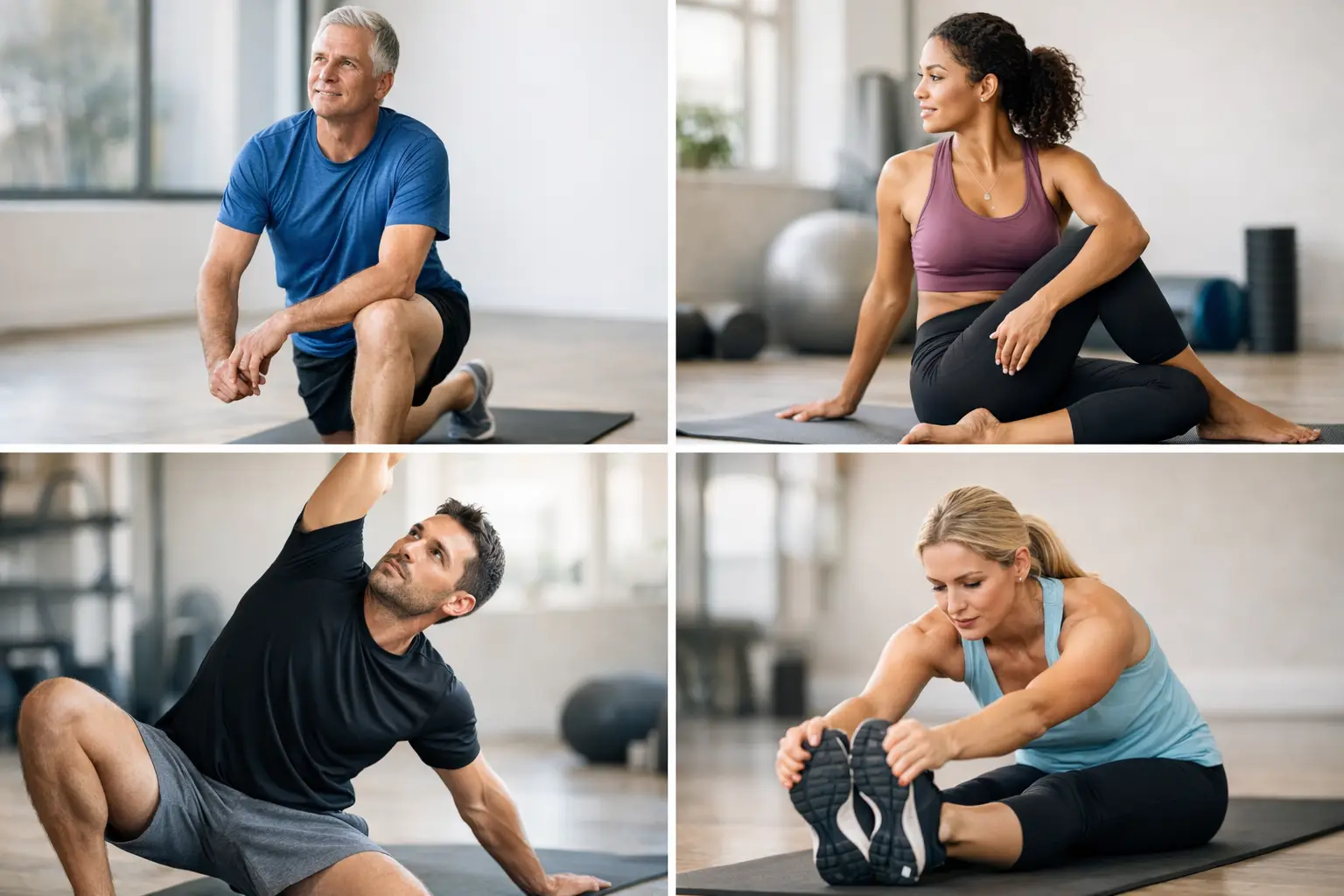
If getting up from the floor feels harder than it used to, your shoulders feel tight by midafternoon, or your hips complain after a long drive, your body is asking for better movement – not just more exercise. The right mobility exercises for adults can help you bend, reach, squat, rotate, and recover with less stiffness and more control, whether you are brand new to fitness or already training regularly.
Mobility is often confused with flexibility, but they are not the same thing. Flexibility is about how much a muscle can lengthen. Mobility is about how well a joint moves through its full range with strength and control. That difference matters. You do not just want loose muscles. You want a body that can move well in real life, from lifting groceries to climbing stairs to keeping good posture at your desk.
For most adults, mobility work is one of the fastest ways to feel better in everyday movement. It can improve workout form, help reduce the wear-and-tear feeling that comes from sitting too much, and support long-term joint health. It is also low-impact, which makes it a smart place to start if high-intensity training feels intimidating or if you are rebuilding consistency.
Why mobility exercises for adults matter
Adult bodies are dealing with a lot. Long commutes, desk work, stress, repetitive movement patterns, and past injuries all leave their mark. Even active people can develop stiff ankles, tight hips, limited upper-back rotation, or shoulders that do not move as smoothly as they should.
That is why mobility training is not just for athletes or people in rehab. It is for the parent carrying a toddler on one hip, the professional sitting in meetings all day, and the weekend warrior who wants to keep playing tennis, golfing, or running without feeling beat up. Better mobility supports better mechanics, and better mechanics usually mean more comfort and more confidence.
There is also a trade-off to understand. Mobility work helps, but more is not always better. If you push aggressive stretching into painful ranges or move too fast without control, you can irritate the very joints you are trying to support. The goal is steady improvement, not forcing range.
How to use these mobility exercises for adults
Think of these movements as a short practice, not a punishment. You can do them before a workout as part of your warm-up, on recovery days, or as a 10 to 15 minute reset after long periods of sitting. Move slowly, breathe steadily, and stay in a range that feels challenging but manageable.
If you have a current injury, recent surgery, dizziness, numbness, or sharp joint pain, it is worth checking with a qualified medical professional before starting. And if one exercise does not feel right for your body, that does not mean mobility work is not for you. It usually means you need a modification.
10 mobility exercises for adults to start with
1. Cat-cow
Start on your hands and knees with your hands under your shoulders and knees under your hips. Slowly round your spine as you exhale, then gently arch your back and lift your chest as you inhale.
This move helps the spine move through flexion and extension without impact. It is especially useful in the morning or after long periods of sitting. Keep the motion smooth instead of dramatic.
2. Thread-the-needle
From hands and knees, slide one arm under your body and rotate through your upper back, letting your shoulder and the side of your head move toward the floor. Return to center and repeat before switching sides.
This is a great exercise for upper-back rotation, which many adults lose over time. When the upper back gets stiff, the neck and lower back often try to do extra work. That usually leads to discomfort.
3. Hip circles
Stand tall and hold onto a wall or chair for support if needed. Lift one knee and slowly circle the hip in a controlled motion, then reverse the direction.
Hip circles wake up the joint without forcing a stretch. They are helpful before walks, strength training, or Pilates sessions because they improve body awareness and control at the hip.
4. 90-90 hip switches
Sit on the floor with both knees bent, one leg in front and one to the side, creating two 90-degree angles. Rotate your legs side to side while keeping your chest as upright as possible.
This exercise targets internal and external hip rotation, two ranges that often get ignored until they become limited. If sitting upright is difficult, place your hands behind you for support.
5. World’s greatest stretch
Step one foot forward into a lunge, place both hands inside the front foot, then rotate the arm on that same side toward the ceiling. Return the hand down and repeat.
Yes, the name is a little dramatic, but it earns its reputation. It opens the hips, lengthens the back leg, and adds upper-body rotation in one movement. If balancing is tricky, keep the back knee on the floor.
6. Ankle rocks
Stand facing a wall with one foot forward. Keeping your heel down, drive your front knee gently toward the wall, then return.
Ankle mobility is easy to overlook, but it affects squatting, walking, stair climbing, and balance. If your ankles are stiff, your knees and hips often have to compensate. Small, consistent work here goes a long way.
7. Deep squat hold with support
Hold onto a sturdy surface and lower into a squat as far as you comfortably can, keeping your heels grounded if possible. Stay there for a few breaths, then stand up.
This position improves mobility through the ankles, hips, and lower back while also helping you get more comfortable near the bottom of a squat. It does not have to look perfect. Supported range still counts.
8. Shoulder wall slides
Stand with your back against a wall and your arms bent like goalposts. Slide your arms upward as far as you can without arching your lower back or shrugging excessively, then return.
Wall slides build shoulder mobility with control, which is what many adults need most. If overhead movement feels pinchy, reduce the range and focus on keeping the ribs down.
9. Open book rotation
Lie on your side with your knees bent and arms extended straight in front of you. Open the top arm across your body, rotating through your upper back, then return.
This is a gentle option for thoracic mobility and can feel especially good after a workday spent hunched over a keyboard. The key is to rotate through the upper back instead of yanking the shoulder backward.
10. Glute bridge with reach
Lie on your back with your knees bent and feet flat. Lift your hips into a bridge while reaching one arm overhead, then lower and switch sides.
This combines hip extension with core control and shoulder movement. It is a smart reminder that mobility is not only about stretching. It is about moving through range with support from the muscles around the joint.
What a simple weekly routine can look like
You do not need an hour a day to make progress. Most adults do well with 10 to 15 minutes, four to six days a week. Consistency beats intensity here.
A good starting flow might include cat-cow, thread-the-needle, 90-90 hip switches, ankle rocks, wall slides, and a supported deep squat hold. If you are using mobility before a workout, keep the pace a little more active. If you are doing it at night to unwind, slow down and hold each position a bit longer.
It also depends on your goals. If you sit most of the day, focus on hips, upper back, and shoulders. If you strength train, pay close attention to ankles, hips, and thoracic rotation. If you are just getting back into exercise, the best routine is the one you will actually repeat.
How to know it is working
Mobility progress is not always dramatic at first. Sometimes it shows up as less stiffness when you wake up, better posture in class, smoother squats, or fewer little aches after a busy day. Those wins count.
You may also notice you can breathe more easily in certain positions, hold your alignment better, or feel more stable during strength work. That is a sign your body is not just gaining range. It is learning how to use it.
At TNT Fitness Studio B, this is exactly why mobility is treated as part of real training, not an afterthought. When adults build strength, flexibility, and control together, progress tends to last longer and feel better.
If you have been waiting until you feel less stiff, less tired, or more in shape to start moving better, start now instead. A few smart minutes each day can change how your body feels in workouts, at work, and at home – and that kind of progress is worth showing up for.