You do not need to leave class feeling wrecked to know you got stronger. That idea keeps a lot of people stuck – especially those managing stiff joints, a busy schedule, old injuries, or just the wear and tear of real life. Low impact workout classes offer a smarter path. They challenge your muscles, improve your mobility, and build endurance without asking your body to absorb the repeated pounding that can make exercise hard to sustain.
For many adults, that balance is exactly what makes consistency possible. When a workout leaves you energized instead of depleted, it becomes easier to come back the next day, next week, and next month. That is where real progress starts.
What low impact workout classes actually mean
Low impact does not mean low effort. It means at least one foot stays on the ground most of the time, reducing the force that moves through your ankles, knees, hips, and lower back. Instead of high jumps, hard landings, and nonstop explosive movement, the focus shifts to controlled strength, stability, posture, flexibility, and muscular endurance.
That distinction matters because many people hear low impact and assume the class will be too easy. In reality, a well-designed class can be demanding in the best way. Slow, controlled Pilates work can light up your core fast. Circuit training with thoughtful pacing can raise your heart rate while keeping movement joint-friendly. Mobility-based strength work can expose weaknesses that high-intensity workouts often hide.
The goal is not to avoid challenge. The goal is to apply it in a way your body can recover from and build on.
Why low impact workout classes work so well for real life
The biggest advantage of low impact training is sustainability. If your routine constantly leaves you sore, inflamed, or mentally drained, it is hard to stay consistent long enough to see meaningful results. A lower-impact approach can help you train more regularly because it respects your recovery, your schedule, and your current fitness level.
That makes these classes a strong fit for beginners, but not only beginners. They also work well for active adults who want to improve movement quality, athletes who need better core control and mobility, and anyone returning after time away from exercise. A person can be very motivated and still need a format that supports their joints and confidence.
There is also a functional benefit that often gets overlooked. Many low impact classes spend more time on alignment, balance, and body awareness. That carries over into daily life. You may notice better posture at your desk, more control when lifting groceries, less stiffness when getting out of the car, and greater confidence moving through your day.
The results people can expect
When low impact workout classes are programmed well, the results are practical and noticeable. Strength improves because the muscles stay under tension with more control. Mobility improves because joints move through fuller, more intentional ranges of motion. Core endurance improves because the body learns to stabilize through different positions instead of relying on momentum.
Cardio fitness can improve too, depending on the class style. A circuit format with purposeful sequencing can elevate your heart rate without the pounding of sprints or jump training. You may not feel the same breathless rush as a bootcamp built around burpees, but that does not mean the training is less effective. It just stresses the body differently.
Body composition changes can also happen with low impact training, though this is where expectations should stay realistic. Results depend on consistency, intensity, recovery, nutrition, and your starting point. Low impact is not a shortcut. It is a method. For many people, it works better precisely because they can stick with it.
Who benefits most from low impact classes
A lot of people do. If you are new to exercise and want coaching, low impact classes can give you structure without making the experience feel intimidating. If you sit most of the day and feel tight through your hips, shoulders, and back, they can help restore movement quality while building strength. If you have a history of joint discomfort, they can offer a more manageable way to stay active.
They are also useful for people who are already fit. That may sound surprising, but performance is not built on intensity alone. Better stability, breathing mechanics, coordination, and range of motion can improve how you train across the board. Sometimes the most advanced move is learning how to control your body well, not just push it harder.
There are still cases where modifications matter. Low impact does not automatically mean injury-safe for every person or every condition. Someone with acute pain, recent surgery, or a specific medical concern may need individualized guidance. That is why expert coaching matters so much. Good instruction helps you work at the right level instead of guessing.
Pilates and circuit training are a strong combination
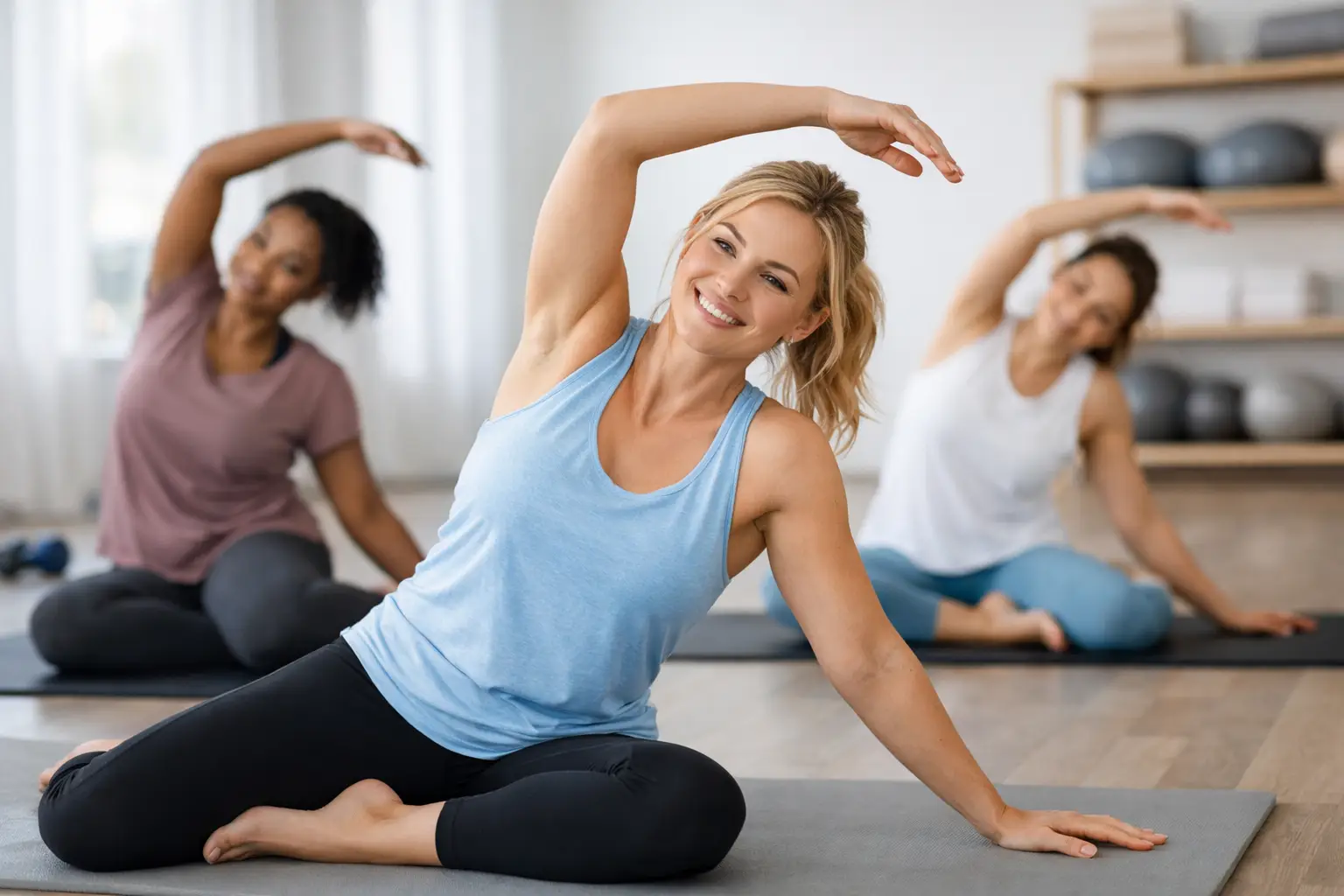
Two of the most effective formats for low impact workout classes are Pilates and circuit training, especially when both are taught with attention to form and progression. Pilates builds deep core strength, posture, control, and flexibility. It teaches you how to move with intention instead of rushing through reps. That is valuable whether your goal is less back discomfort, better balance, or a stronger foundation for everything else you do.
Circuit training brings a different kind of benefit. It keeps class engaging and efficient by moving you through stations or timed intervals that target multiple muscle groups. In a low impact format, the emphasis stays on controlled strength, smart conditioning, and full-body function rather than constant jumping or speed for the sake of speed.
Together, these methods create balance. Pilates helps you connect, align, and stabilize. Circuit training helps you apply that strength in a dynamic, practical way. One builds awareness. The other reinforces capacity. For many adults, that pairing supports both how they want to look and how they want to feel.
What to look for in a class
Not all low impact classes are created equal. Some are truly well-coached and progressive. Others are simply lower energy without much direction. If you want results, look for a class that offers clear instruction, thoughtful modifications, and a sense of progression over time.
A strong class should help you understand what you are doing and why. You should hear coaching around alignment, breathing, tempo, and muscle engagement, not just generic encouragement. The environment matters too. People do better when they feel supported, seen, and comfortable asking questions.
That is one reason boutique studio training can be such a good fit. In a more personal setting, coaches can actually watch your movement, give feedback, and help you adjust. At TNT Fitness Studio B, that kind of guidance is part of the experience. The goal is not just to get through class. It is to help you move better, get stronger, and keep building momentum.
How often should you do low impact workout classes?
It depends on your goals, training history, and recovery. For many people, two to four classes per week is a strong place to start. That is enough to build consistency and feel progress without overwhelming your schedule or your body. If you are returning to exercise, even two quality sessions each week can make a real difference.
Some people use low impact classes as their full routine. Others use them to complement walking, strength work, or higher-intensity training. Both approaches can work. What matters most is whether your plan is helping you stay consistent, recover well, and keep moving toward your goals.
If you are always chasing the hardest workout in the room, it may take some time to appreciate a different kind of challenge. But once you feel stronger getting out of bed, more stable in your workouts, and less achy at the end of the day, the value becomes obvious.
Why this approach lasts
Fitness should support your life, not constantly compete with it. That is why low impact workout classes continue to make sense for so many adults. They meet you where you are, but they do not leave you there. They create room for progress while respecting your body, your responsibilities, and the fact that long-term wellness is built one session at a time.
If you have been waiting for a sign that exercise does not have to feel punishing to be effective, this is it. Start with a class that teaches you how to move well, stay consistent, and trust your body again. Stronger, steadier progress often begins with less impact and more intention.