A tight hip getting out of the car, stiff shoulders after a workday, or a squat that never quite feels comfortable can make exercise feel harder than it needs to. So, what does mobility training do? It helps your body move through its available range with more control, strength, and confidence – not just during a workout, but throughout the movements that fill your day.
Mobility work is not about forcing yourself into extreme stretches or chasing a perfect yoga pose. It is about building a body that can bend, reach, rotate, squat, step, and carry with less restriction. For beginners, that can make fitness feel more approachable. For experienced exercisers, it can improve technique, help manage training stress, and support continued progress.
What Does Mobility Training Do for Your Body?
Mobility training improves your ability to actively control a joint through its range of motion. That distinction matters. Your hip may be able to move farther when someone else gently stretches it, but true mobility means you can create and control that movement yourself when you lunge, climb stairs, lift a grocery bag, or move through a Pilates class.
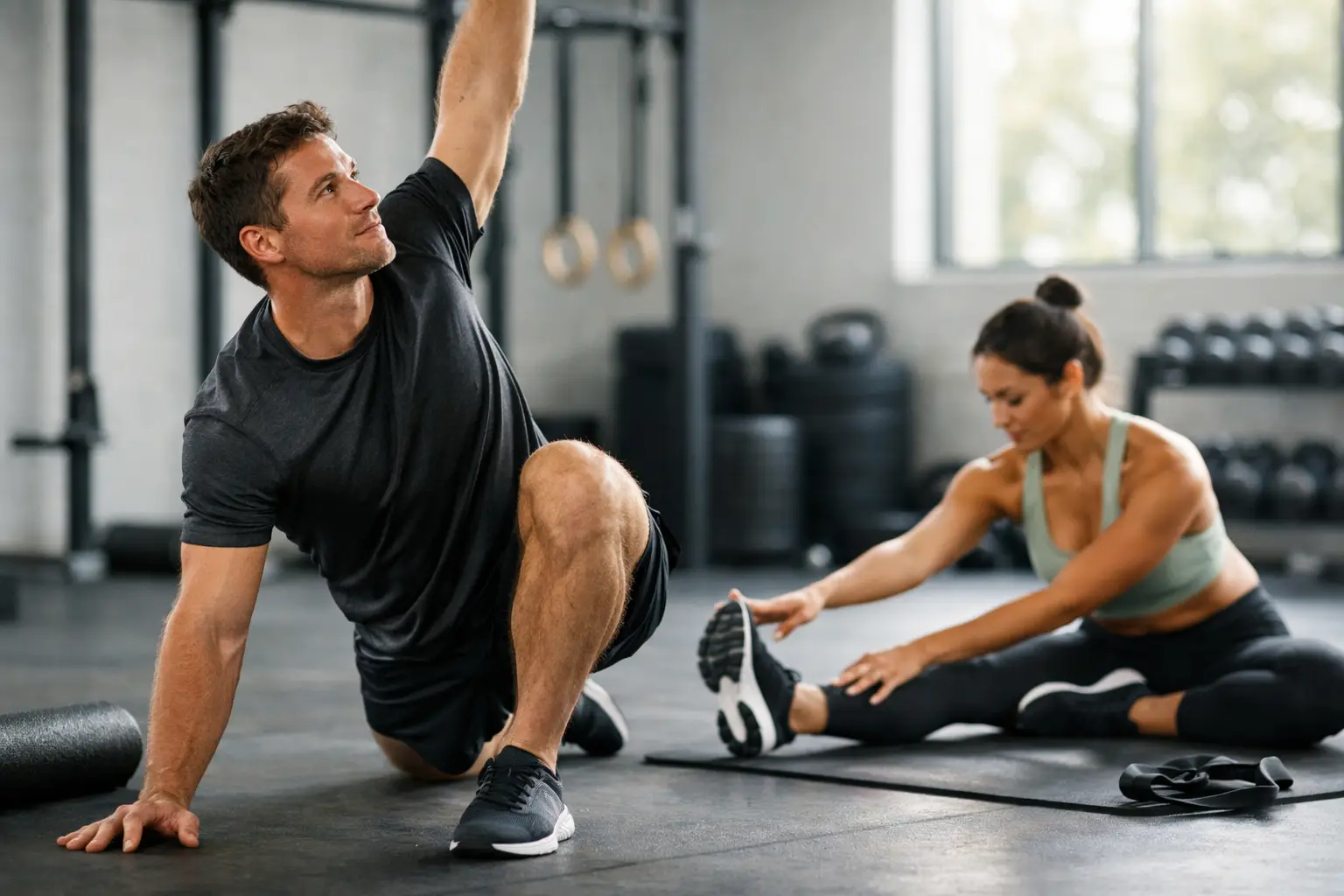
A well-designed mobility practice asks your muscles, joints, and nervous system to work together. You may use slow hip circles, supported squats, thoracic spine rotations, ankle drills, and controlled shoulder movements. Over time, these exercises can improve body awareness and teach you where your movement starts to compensate.
For example, if your ankle does not bend well, your knees may collapse inward during a squat or your heels may lift off the floor. If your upper back is stiff, your low back or shoulders may work overtime when you reach overhead. Mobility training does not promise to fix every ache, but it can help identify and improve movement limitations that affect how you feel and perform.
Mobility Is More Than Flexibility
Flexibility and mobility work well together, but they are not the same thing. Flexibility describes the passive length of a muscle or the range you can reach with outside assistance. Mobility includes strength and coordination within that range.
Think of it this way: being able to pull your knee toward your chest with your hands shows flexibility. Lifting that knee smoothly without leaning back, hiking one hip, or losing balance shows mobility. The second skill has a more direct connection to everyday function.
This is why mobility training often feels more active than a traditional stretch session. You might pause at the bottom of a controlled squat, slowly rotate through your upper back, or use light resistance to strengthen a position that once felt shaky. The goal is not simply to become looser. The goal is to own the range you have.
Better Mobility Can Improve Everyday Movement
Most people do not notice restricted movement all at once. It builds quietly through long periods of sitting, repetitive work positions, old injuries, stressful weeks, or workouts that focus on the same movement patterns. Then a simple task – turning to look behind you while driving, kneeling to pick something up, or reaching for a high shelf – starts to feel awkward.
Mobility training can make these daily motions feel smoother by improving how your body shares the work. More comfortable hip movement can support walking, stairs, and bending. Improved ankle mobility can help with balance and squatting. A stronger, more mobile upper back can support posture and overhead reach.
Better posture is often a welcome benefit, but it is not about holding yourself rigidly upright all day. Healthy posture is the ability to change positions comfortably and regularly. A body with movement options is less likely to rely on one stiff, tired position for hours at a time.
Mobility Supports Stronger Workouts
Mobility is not separate from strength training. It helps you get into positions where strength training can be more effective. When you can maintain a stable spine in a hinge, keep your knees tracking well in a squat, or reach overhead without shrugging through your neck, you can train with greater intention.
That does not mean you need perfect mobility before lifting weights, taking a circuit class, or starting Pilates. In fact, movement practice is one of the ways mobility improves. The right exercise variation, range, and coaching can help you build strength where you are now while gradually expanding what feels available.
For active adults, mobility can also support recovery between challenging sessions. Gentle, controlled movement may reduce the feeling of stiffness after training and help you reconnect with positions that feel limited. It is not a replacement for sleep, nutrition, rest days, or professional medical care when needed. It is one useful part of a sustainable routine.
Why Control Matters as Much as Range
Pushing farther is not always better. If you force a stretch and feel pinching, sharp pain, numbness, or joint instability, more range is not the answer in that moment. Your body may need a different angle, less intensity, more support, or an evaluation from a qualified healthcare professional.
Good mobility training respects your current starting point. A supported lunge may be more valuable than a deep lunge you cannot control. A smaller shoulder rotation performed with a steady rib cage may be more useful than a large arm circle that creates tension in your neck.
This approach can be especially empowering for people returning to exercise after a break. You do not have to earn the right to move well by suffering through painful stretches. You can begin with manageable, low-impact movements and build consistency one session at a time.
How Mobility Training Fits Into a Weekly Routine
You do not need a separate hour-long mobility workout every day to see benefits. Short, focused practice done consistently often works better than an occasional marathon stretch session. Five to ten minutes before a workout can prepare the areas you plan to use. A few relaxed movements after a long day can help you transition out of sitting and back into your body.
The best routine depends on your goals and your movement history. Someone who spends most of the day at a desk may benefit from upper-back rotation, hip movement, and ankle work. A runner may need more attention to calves, ankles, hips, and single-leg control. A person building strength may focus on the joints that affect their squat, hinge, push, and pull patterns.
Classes can make this process easier because coaching helps you choose the right exercise and notice compensations you may not feel on your own. At TNT Fitness Studio B, mobility is treated as part of functional strength, not as an afterthought. Pilates-based control, thoughtful warm-ups, and low-impact conditioning can all help members build movement quality alongside endurance and strength.
What a Productive Mobility Session Feels Like
A productive session should leave you feeling more connected, not depleted. You may notice warmth in the muscles around a joint, a smoother range of motion, or a clearer sense of how to position your body. Mild effort is normal when you are building active control. Sharp pain, lingering joint pain, or symptoms that worsen after each session are signs to stop and get guidance.
Breathing is a useful check-in. If you have to hold your breath and brace hard to complete a simple mobility drill, the exercise may be too advanced or too intense right now. Slow breathing can help you stay relaxed enough to move with control while still engaging the muscles that support the position.
Progress may show up in small, meaningful ways: your squat feels steadier, your back feels less stiff after a commute, or you can reach overhead without tension in your neck. Those changes add up because they make it easier to keep showing up for the activities that support your health.
Mobility training gives you more than a deeper stretch. It gives you options in how you move, train, and live. Start with one area that feels limited, practice it patiently, and let consistent effort build the confidence to move well for the long run.