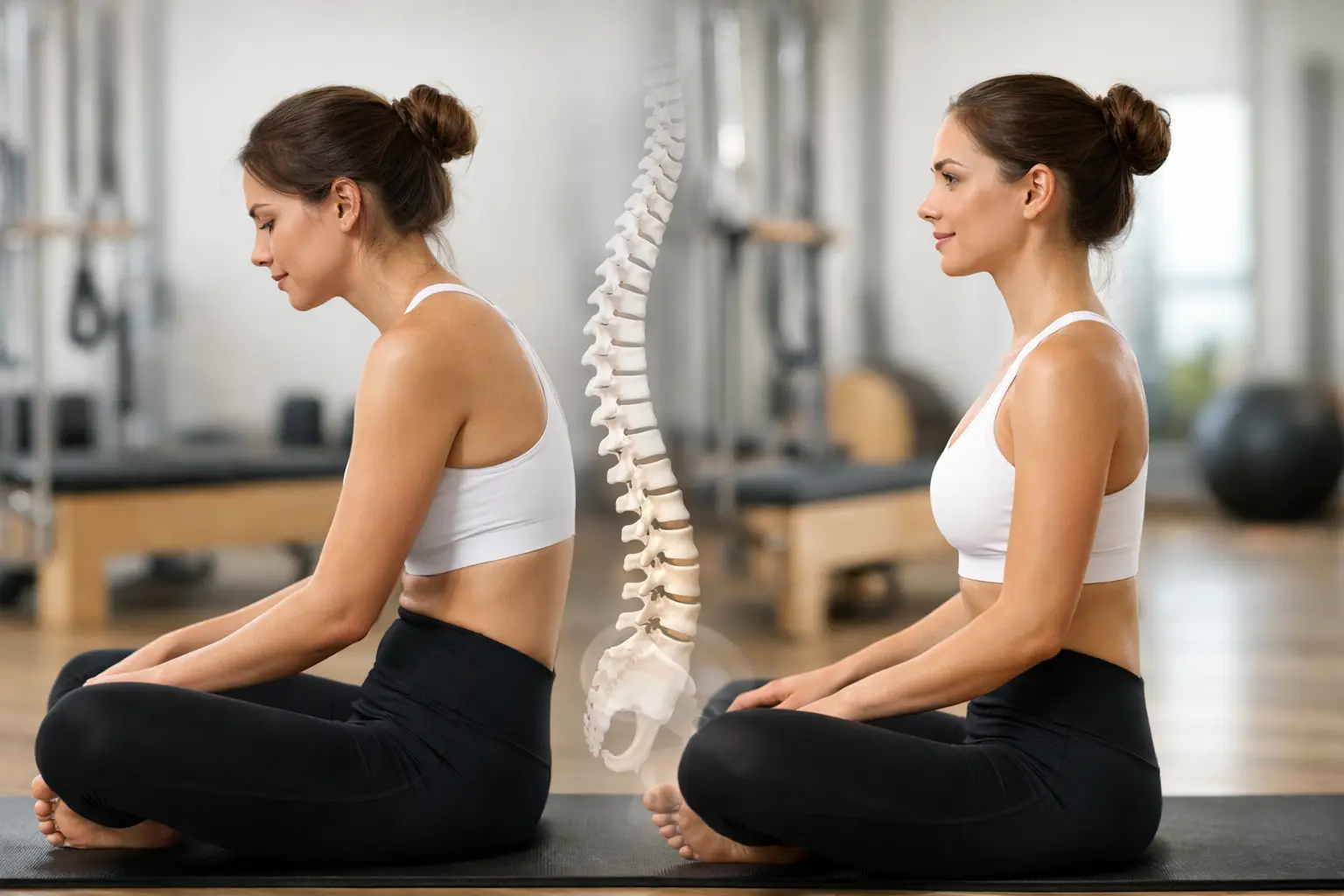
A forward head at your laptop, shoulders creeping toward your ears in traffic, or a low back that feels tight after standing in the kitchen can make posture feel like a problem you need to force into place. Real pilates posture improvement results work differently. Rather than asking you to hold a rigid position all day, Pilates helps you build the core strength, mobility, and body awareness to return to better alignment naturally.
That difference matters. Good posture is not about pulling your shoulders back until you feel tense. It is about having enough support through your trunk, hips, and upper back to move, sit, stand, and exercise with more ease. For many adults, that can mean less stiffness, more confidence, and a stronger foundation for everything from circuit training to carrying groceries.
What Pilates Posture Improvement Results Can Look Like
The first changes are often felt before they are seen. You may notice that you can sit through a work meeting without constantly shifting, that your neck feels less strained after looking at a screen, or that standing tall takes less effort. Those are meaningful wins because they reflect better control, not just a temporary correction in the mirror.
Over time, consistent Pilates can help improve the way your head, rib cage, pelvis, and shoulders work together. A stronger deep core can give the spine more support. Better upper-back mobility can make it easier for the shoulders to rest in a more comfortable position. Stronger glutes and more mobile hips can reduce the tendency to hang into the low back or shift your weight to one side.
Visible changes vary from person to person. If you have spent years sitting, driving, working at a desk, or moving around an old injury, your starting point will be different from someone who is already active. Pilates will not change the shape of your bones or erase every curve in the spine. It can, however, help you use the movement options your body has more effectively.
A realistic goal is to feel more stacked, stable, and comfortable in your everyday positions. You may stand more evenly, reach overhead with less compensation, and move through workouts with better control. Those changes can make you look more upright, but the real benefit is how capable you feel.
Why Posture Changes With Pilates
Pilates is especially useful for posture because it trains the parts of the body that need to coordinate, not just the muscles that look strong. Many posture habits come from a combination of low endurance, limited mobility, stress, repetitive positions, and a lack of awareness. Simply stretching your chest or doing a few crunches rarely addresses the full picture.
In a well-coached class, you learn to connect breath with core engagement and controlled movement. You practice keeping the rib cage from flaring while lifting the arms, stabilizing the pelvis as the legs move, and using the upper back without gripping the neck. These details teach your body how to distribute effort more efficiently.
Pilates also builds endurance. Posture is not a position you achieve once. It is your ability to adapt and maintain support throughout the day. A strong core that tires quickly may feel great for the first 20 minutes of your morning, then disappear when you are tired, rushed, or sitting at your desk. Repeated, intentional practice helps improve that staying power.
The role of mobility
Strength without mobility can still leave you feeling restricted. If your chest, hip flexors, or upper back are stiff, your body may compensate somewhere else. Pilates includes controlled mobility work that can help you access a fuller range of motion while keeping the body supported.
This is why the goal is not to stretch everything aggressively. Some people need more length through the front of the hips and chest. Others need better control around flexible joints. Individual coaching helps determine what your body needs instead of applying the same posture cue to everyone.
The role of awareness
You cannot change a habit you do not notice. Pilates makes you more aware of where you carry tension, how you shift your weight, and when your shoulders begin to creep upward. That awareness carries into real life.
You may catch yourself leaning into one hip while waiting in line or craning your neck toward your phone. The answer is not to criticize yourself. It is to reset with a breath, soften unnecessary tension, and use the strength you are building in class.
How Long Does It Take to See Results?
Many people feel a difference within a few sessions. They may leave class feeling taller, more open through the chest, or more connected to their core. Those early sensations are encouraging, but lasting Pilates posture improvement results come from consistency.
With two to three sessions per week, many clients begin noticing more reliable changes in four to eight weeks. Around the two- to three-month mark, everyday movements may feel noticeably easier, especially when Pilates is paired with regular walking, strength training, smart recovery, and better workstation habits.
Your timeline depends on several factors: how often you practice, your current activity level, sleep, stress, old injuries, and how many hours you spend in the same position each day. A person who attends class twice a week but sits with little movement for 10 hours daily may progress differently than someone who also takes short movement breaks and strength trains regularly.
The good news is that you do not need perfect habits to improve. You need a plan you can repeat. A supportive studio setting can make that easier by giving you structure, coaching, and a community that keeps you showing up when motivation is low.
How to Get Better Results From Your Practice
The most effective approach is to treat Pilates as skill-building, not a quick posture fix. Come to class ready to focus on quality over speed. Smaller, controlled movements often create more benefit than pushing through a larger range with poor alignment.
Pay attention to the cues that challenge you most. If you tend to tense your jaw and neck, practice relaxing them when the work gets hard. If you lose your rib position during arm movements, slow down and make that control your priority. These are not small details. They are the work that helps your new movement habits stick.
Outside class, build in brief resets rather than trying to sit perfectly all day. Stand up between meetings, take a short walk, change positions, and breathe deeply into the sides and back of your ribs. If you work at a computer, bring the screen closer to eye level when possible and let your elbows rest comfortably instead of reaching forward all day.
Strength training can complement Pilates, too. Exercises that build your back, legs, and glutes can support your posture goals when performed with good technique. At TNT Fitness Studio B, the combination of Pilates, functional training, and personalized coaching gives members a practical way to build strength without losing the mobility and control that keep movement feeling good.
Common Expectations That Can Slow Progress
One common mistake is trying to “fix” posture by constantly squeezing the shoulder blades together. That can create more tension, especially if your upper back is already stiff or your neck is doing too much work. A better goal is to let the shoulders rest comfortably while your trunk and upper back provide support.
Another is assuming discomfort is always a sign of progress. Muscle fatigue during a challenging class is normal. Sharp pain, numbness, increasing pain, or symptoms that travel into an arm or leg deserve professional medical attention. Pilates instructors can offer movement guidance, but they do not replace evaluation from a qualified healthcare provider when needed.
Finally, avoid measuring progress only through before-and-after photos. Photos can be useful, but they do not capture reduced soreness, easier breathing, improved balance, or the confidence of walking into a room without feeling folded over. Notice the functional changes, too.
A Stronger Way to Stand Starts With Practice
Better posture is not about becoming perfectly still or policing your body all day. It is about giving yourself more choices: the choice to sit comfortably, move confidently, train with control, and recover from the demands of daily life. Start where you are, stay consistent, and let each well-coached session build a little more support into the way you move.