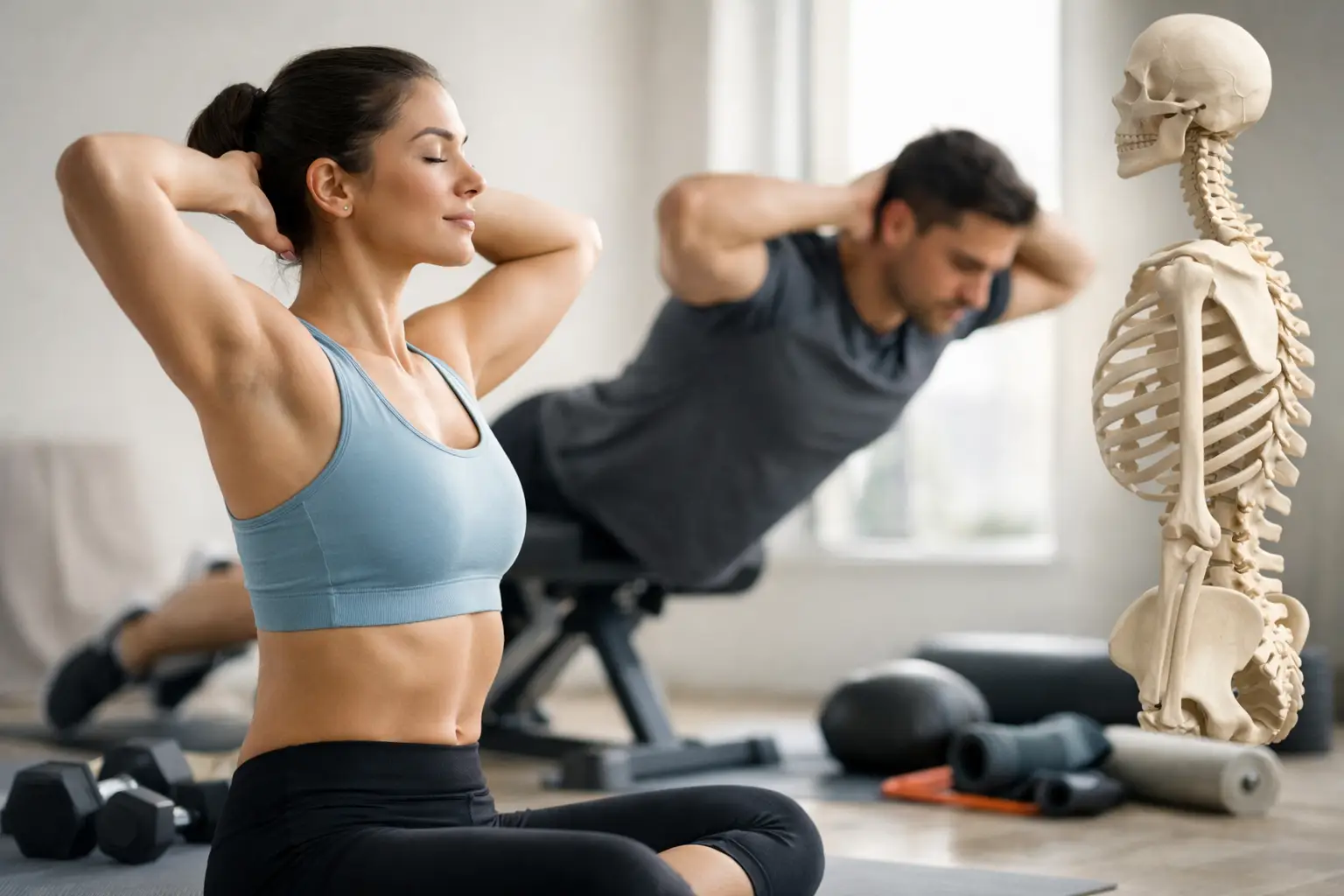
If your shoulders creep forward by noon, your neck feels tight after a workday, or your lower back starts talking every time you stand up from the couch, your body is giving you useful feedback. The best workouts for better posture are not about forcing yourself to sit stiff and straight. They are about building the strength, mobility, and body awareness that make good posture feel natural.
That matters because posture is not just about appearance. It affects how you breathe, how your joints handle stress, how confidently you move, and how much energy everyday life seems to require. For most adults, especially those balancing desk work, commuting, family demands, and inconsistent exercise, posture improves fastest when workouts train the whole system instead of one problem area.
What actually improves posture
Better posture usually comes from three things working together: stronger support muscles, more mobility where you are tight, and better control of how you move throughout the day. If one piece is missing, progress tends to stall.
For example, stretching your chest can help if your shoulders round forward, but if your upper back and core are weak, you will drift right back into the same position. On the other hand, if you only strengthen your back without opening the front of the body, you can end up feeling just as restricted. That is why the best approach is balanced.
The best workouts for better posture
1. Pilates for core control and alignment
Pilates is one of the most effective workouts for posture because it teaches you how to organize your body instead of just pushing through reps. Done well, it strengthens the deep core, improves pelvic positioning, and helps you become more aware of how your spine, ribs, and shoulders line up.
This matters more than people realize. A lot of posture issues start with poor control through the midsection. When the core is not doing its job, the neck, shoulders, and lower back often try to compensate. Pilates helps train stability without a lot of impact, which makes it a strong option for beginners, busy professionals, and anyone dealing with stiffness or recurring discomfort.
It is also one of the few methods that consistently improves both strength and movement quality at the same time. That combination is a big reason so many people feel taller, steadier, and less tense after a few weeks of regular practice.
2. Strength training for the upper back and posterior chain
If you spend hours at a desk or on your phone, you probably need more pulling than pushing in your routine. Strength training that targets the upper back, glutes, and hamstrings helps counter the rounded, collapsed positions that show up from too much sitting.
Rows, rear delt work, Romanian deadlifts, glute bridges, and other posterior chain exercises can make a real difference. They teach your body to support your spine from behind, which is a big part of standing and walking with less strain.
The trade-off is that form matters a lot. Heavy strength training can absolutely support posture, but if you rush through reps or lift with poor mechanics, you can reinforce the same movement habits you are trying to fix. For most people, controlled resistance training works better than chasing max weight.
3. Mobility training for the thoracic spine and hips
Posture is not only a strength issue. Sometimes your body simply cannot get into better positions comfortably because certain areas are too restricted. The thoracic spine, hips, and shoulders are common trouble spots.
Mobility training helps restore movement where you need it most. When your upper back can extend and rotate better, your shoulders and neck usually do not have to work so hard. When your hips move more freely, your lower back often gets a break too.
This is where many people get frustrated, because mobility work does not always feel dramatic right away. But it creates the room your strength exercises need in order to stick. A few focused drills done consistently often work better than one long stretching session once a week.
4. Circuit training with posture-focused coaching
A well-designed circuit workout can be excellent for posture because it trains strength, endurance, and movement patterns together. When you move through stations that include core work, pulling exercises, hip strengthening, and controlled full-body movements, you build the kind of practical fitness that carries into real life.
The key phrase here is well-designed. Not every circuit class supports posture. If a workout is all speed, fatigue, and sloppy reps, it can make things worse. But when coaching emphasizes alignment, breathing, and control, circuit training becomes a smart option for improving how you move under mild fatigue, which is exactly what daily life tends to demand.
For many adults, this style also feels more engaging than traditional gym training. You get structure, variety, and accountability without losing the focus on form.
5. Resistance band training for shoulder position
Resistance bands are simple, but they are incredibly useful for posture work. They help strengthen the muscles around the shoulder blades, reinforce external rotation, and improve control without needing heavy equipment.
Band pull-aparts, face pulls, and controlled rowing variations are common examples. These exercises can help wake up muscles that often get ignored when posture starts to slip.
Bands are especially helpful for home workouts or for people easing back into exercise. They are accessible and low-impact, though they are usually most effective as part of a larger plan rather than a complete solution on their own. If all you do is band work, you may improve shoulder positioning but miss bigger issues involving the core, hips, and spinal control.
Best workouts for better posture at different fitness levels
If you are a beginner, start with Pilates, basic mobility work, and light resistance training. That combination builds awareness first, which tends to make everything else safer and more effective. You do not need a punishing workout. You need consistency and good coaching.
If you already exercise regularly, posture improvements often come from refining your program rather than adding more volume. You may need more pulling, more single-leg strength, more core stability, or better recovery between hard sessions. Sometimes the issue is not that you are doing too little. It is that your routine is missing balance.
If you are active but dealing with chronic stiffness, it helps to take the pressure off perfection. Better posture does not mean forcing a military-straight position all day. It means having more options, better support, and less tension in your default movement patterns.
What to prioritize in a weekly routine
The most effective weekly plan usually includes two to three strength-based sessions, at least one mobility-focused session, and repeated practice of posture-friendly movement during normal life. Short sessions count. Ten to fifteen minutes of targeted work done several times a week can create more change than occasional marathon workouts.
You will usually see the best results when your plan includes deep core training, upper back strengthening, glute work, thoracic mobility, and breathing practice. That mix supports your body from multiple angles.
This is also where community and coaching can make a huge difference. In a supportive studio environment like TNT Fitness Studio B, posture work becomes easier to stay consistent with because you are not left guessing whether you are doing the right exercises or doing them well. That guidance can speed up progress and make the process far less frustrating.
A few posture mistakes to avoid
One of the biggest mistakes is only stretching what feels tight. Tightness is real, but it is not always the full problem. Muscles often feel tight because they are overworking to make up for weakness somewhere else.
Another common mistake is training chest, shoulders, and abs heavily while ignoring the upper back and glutes. That imbalance tends to pull posture further forward, even in people who work out often.
It also helps to avoid expecting workouts to erase eight to ten hours of daily sitting overnight. Exercise absolutely helps, but your everyday habits still matter. Standing up more often, adjusting your screen height, carrying yourself with awareness, and changing positions regularly all support the work you do in class or in the gym.
How long does it take to notice a difference?
That depends on the starting point, consistency, and whether the workout plan actually matches your needs. Some people feel relief in a couple of weeks, especially if they begin moving more and strengthening the right areas. Visible changes in posture usually take longer.
The good news is that progress does not have to be dramatic to be meaningful. Less neck tension, easier breathing, stronger core endurance, and more comfort during everyday movement are all signs that your posture is improving. Those wins matter.
If you want better posture, choose workouts that help your body work smarter, not just harder. Build strength where you need support, improve mobility where you feel stuck, and give yourself enough coaching and repetition to turn those changes into habits. Stand a little taller, move a little better, and let that be the start of something bigger.