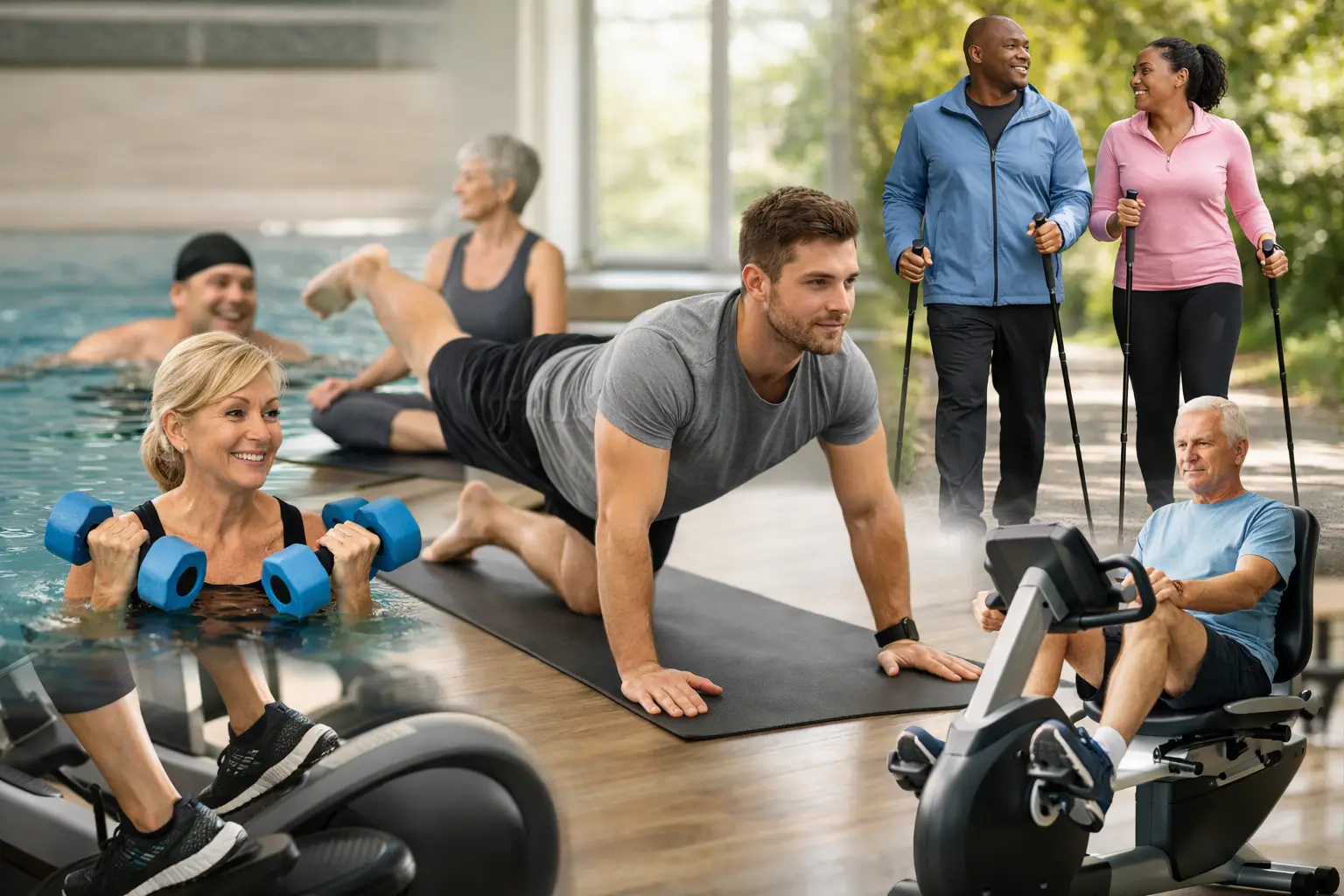
A lot of people do not realize their joints are asking for help until everyday movement starts feeling harder than it should. Knees complain during stairs. Hips tighten after sitting. Wrists and shoulders feel stiff after a workout that was supposed to make you stronger. The good news is that low impact workouts for joints can still challenge your body, improve endurance, and build real strength without beating you up in the process.
That matters if you are getting back into exercise, managing stiffness, recovering from years of high-impact training, or simply trying to move in a way that feels sustainable. Joint-friendly training is not about doing less. It is about doing what works better for your body so you can stay consistent, feel stronger, and keep showing up.
Why low impact does not mean low results
There is a common misconception that if a workout is gentle on the joints, it must also be easy or ineffective. That is just not true. Low-impact training can raise your heart rate, strengthen your muscles, improve core control, and help you move better through daily life.
The difference is in how force travels through the body. High-impact exercise usually includes jumping, pounding, or sudden loading. Low-impact movement keeps at least one foot on the ground or reduces repeated impact, which can lower stress on the knees, hips, ankles, and lower back. For many adults, that trade-off is worth it.
It also creates room to focus on form. When you are not rushing through explosive movements, you can pay attention to alignment, posture, balance, and breathing. That is often where the biggest long-term gains happen.
The best low impact workouts for joints
The right workout depends on your starting point, your fitness level, and which joints tend to get irritated. Still, a few formats consistently work well for people who want strength and conditioning without unnecessary strain.
Pilates for core strength and joint support
Pilates is one of the most effective low-impact options because it builds stability from the center out. A stronger core helps reduce excess stress on the back, hips, and knees, especially during everyday movement like walking, lifting, and standing for long periods.
It is also excellent for posture and control. Many adults in desk-based jobs develop tight hips, weak glutes, and rounded shoulders. Pilates addresses those patterns in a way that feels challenging but controlled. Instead of asking your body to absorb force, it teaches your body to organize movement more efficiently.
That said, not every Pilates class is the same. Beginners often do better with coaching and clear modifications, especially if they have neck tension, back discomfort, or limited mobility.
Circuit training with smart exercise selection
Circuit training can absolutely be joint-friendly when the exercises are chosen well. The key is not the format itself but the movement choices inside it. A good low-impact circuit might include squats to a bench, resistance band rows, step-ups, carries, dead bugs, and controlled bodyweight strength work instead of burpees, jump squats, and repeated floor impact.
This style works well for people who want variety and a solid calorie burn without the wear and tear of bootcamp-style classes. It also keeps workouts engaging, which matters more than most people think. If you enjoy the session, you are far more likely to stay consistent.
The trade-off is that poor coaching can turn circuit training into rushed, sloppy movement. If your knees cave in during squats or your shoulders compensate during pressing exercises, even low-impact work can start to feel uncomfortable. Technique matters.
Walking workouts that build endurance
Walking is often overlooked because it seems too simple, but it is one of the most accessible and effective forms of low-impact conditioning. It supports heart health, circulation, stamina, and stress relief, all while being easier on the joints than running.
For better results, think beyond casual strolling. Brisk walking, incline walking, and interval-based walks can all make a difference. A short walk after meals can also support recovery and overall wellness without adding more physical stress.
If walking bothers your feet, hips, or knees, it is worth checking your shoes, your stride, and your walking surface. Sometimes the issue is not walking itself. It is how your body is handling the repetition.
Strength training with controlled tempo
Strength work is one of the best things you can do for joint health when it is programmed well. Muscles help support and stabilize joints, so building strength often reduces discomfort rather than causing it.
Controlled tempo training is especially helpful. Lowering into a squat slowly, pausing with intention, and pressing with control can build strength without relying on momentum. This approach improves body awareness and often exposes weak links that need attention.
You do not need heavy weights to make this work. Dumbbells, resistance bands, cables, and even bodyweight can be enough when the movement quality is there. For adults dealing with joint sensitivity, that is encouraging. You can get stronger without having to train like an athlete.
Cycling for lower-body conditioning
Stationary biking and outdoor cycling are both strong choices for people who want cardio with less impact. The smooth, repetitive motion can be easier on the knees than jogging, and it helps build endurance in the legs.
Bike setup makes a big difference here. A seat that is too low or handlebars that force poor posture can create discomfort in the knees, hips, neck, or back. If cycling has felt awkward in the past, the position may have been the problem, not the workout.
Cycling is great for conditioning, but it should not be your only mode of exercise. Because it is repetitive and seated, it works best when paired with strength and mobility training.
Swimming and water-based exercise
Water workouts reduce bodyweight load and give the joints a break while still challenging the muscles and cardiovascular system. Swimming, water aerobics, and resistance work in the pool can be especially helpful for people with arthritis, significant joint pain, or those returning from injury.
The main downside is access. Not everyone has a convenient pool, and some people simply do not enjoy water-based exercise enough to stick with it. A good workout only works if you will actually do it.
Mobility-based training and yoga
Mobility work deserves a place in this conversation because stiffness often changes how force moves through the joints. When the ankles are restricted, the knees may take on extra stress. When the thoracic spine is tight, the shoulders may compensate.
Yoga and mobility-focused sessions can improve range of motion, breathing, and body control. They are not always enough on their own for strength or long-term conditioning, but they can make everything else feel better. Think of them as support work that helps your body move more freely and recover more effectively.
How to choose the right low impact workout for your joints
The best place to start is not with trends. It is with honesty. Which movements feel good? Which ones leave you stiff for days? Are you dealing with general deconditioning, or is there a specific joint that flares up every time you train?
If you are new to exercise, start with a format that offers guidance. This is where studio training can be especially valuable. In a coached setting, you can learn how to move well, use modifications when needed, and build confidence faster than you would trying to piece it together alone.
If you already work out regularly but feel worn down, low-impact training can be a smart reset rather than a step backward. Many active adults find that replacing a few high-impact sessions with Pilates, strength circuits, or mobility work helps them perform better overall.
What makes a workout truly joint-friendly
A joint-friendly workout is not just one without jumping. It includes proper alignment, manageable progressions, and enough attention to recovery. It should challenge your muscles and cardiovascular system without leaving your body inflamed from poor mechanics.
That also means respecting individual differences. One person may feel great doing step-ups and lunges, while another needs more support and a smaller range of motion. Some people tolerate cycling well but not rowing. Others feel stronger in a Pilates class than they ever did in a traditional gym setting. It depends.
At TNT Fitness Studio B, that is exactly why coaching matters. A supportive environment, smart programming, and clear instruction can turn low-impact training into a real path forward instead of a temporary compromise.
Consistency is what helps your joints most
Your joints usually do better with regular, well-managed movement than with all-or-nothing effort. A workout does not need to leave you exhausted to be effective. It needs to be repeatable.
If your goal is to feel stronger, move with less stiffness, improve posture, and keep up with daily life without aches running the show, low-impact training is not settling. It is a strategy. Start where your body can succeed, build from there, and let steady progress do what quick fixes never can.