Your shoulders creep toward your ears during a deadline. Your hips feel locked when you stand up for coffee. By late afternoon, even a comfortable chair can feel like the problem. The chair is only part of the picture. Long periods of sitting ask certain muscles to stay shortened and others to stop contributing as much as they should. Pilates for desk workers offers a practical way to rebuild the strength, mobility, and body awareness that a workday can gradually take away.
This is not about chasing perfect posture or forcing yourself into a rigid position all day. It is about helping your body move well enough that sitting, standing, reaching, walking, and exercising feel more comfortable. With consistent practice and coaching, Pilates can support the way you work and the way you want to feel after work.
Why desk work changes how your body feels
Sitting is not automatically bad. Many people do it for work, and a chair is not a fitness failure. The issue is often the length of time spent in one position, especially when that position is paired with stress, shallow breathing, little movement, and a screen that pulls your head forward.
Over time, the hips may feel tight, the chest and front of the shoulders can become restricted, and the upper back may lose some of its natural movement. Meanwhile, the muscles that help stabilize the trunk and pelvis may not be doing their share. That can leave the lower back, neck, and shoulders working overtime during ordinary tasks.
A good Pilates practice does not simply stretch the areas that feel tight. It teaches your body to create support from the inside out. You learn how to engage your deep core, organize your rib cage and pelvis, move your spine with control, and use your hips and shoulders more efficiently. That combination matters because flexibility without strength can feel temporary, while strength without mobility can feel restrictive.
Pilates for desk workers starts with better support
People often hear “core” and picture endless crunches. In Pilates, core work is more useful than that. Your core includes the muscles that help stabilize your trunk as you breathe, rotate, bend, carry groceries, climb stairs, and sit upright without gripping through the neck.
When your trunk has better support, your shoulders and lower back do not have to compensate as much. That does not mean Pilates will erase every ache, especially if stress, sleep, workstation setup, or an old injury are part of the equation. It does mean you can build a stronger foundation for everyday movement.
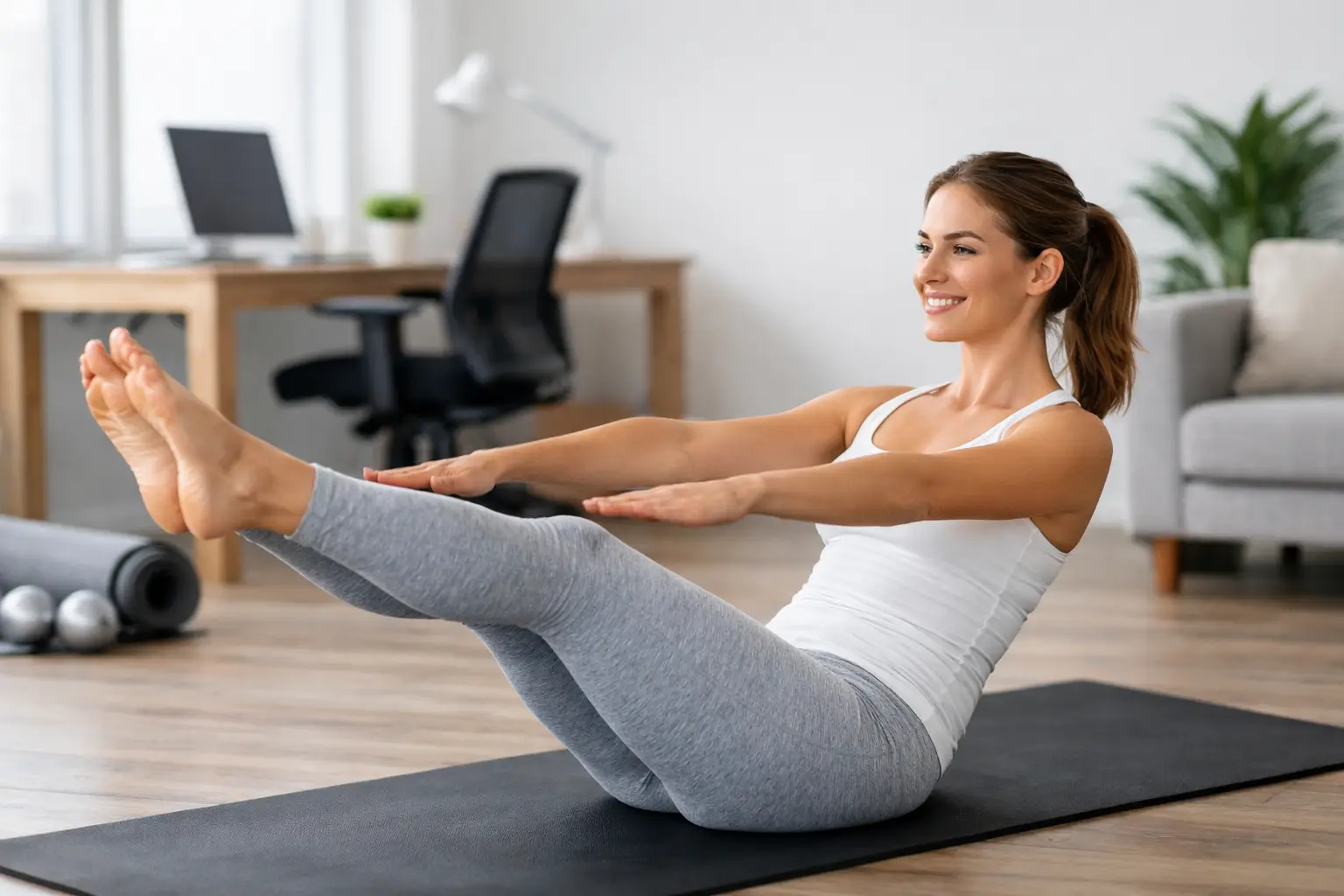
In a guided class, you might practice controlled movements such as pelvic tilts, bridges, leg work, spinal rotation, and side-lying hip exercises. Each exercise has a purpose, but the quality of the movement matters more than how many repetitions you complete. A skilled instructor can help you notice whether you are holding tension in your jaw, arching your back, or letting your shoulders take over.
That attention is one reason Pilates works so well for beginners and experienced exercisers alike. The movements can be adjusted to meet you where you are, then progressed as your control and confidence grow.
A stronger core can improve more than posture
Better posture is a popular Pilates goal, but it helps to define it realistically. Great posture is not one frozen shape you must hold from 9 a.m. to 5 p.m. It is the ability to move into and out of positions with ease, vary your posture throughout the day, and support yourself without unnecessary strain.
Pilates develops that adaptability. You may notice that you sit taller in meetings, stand with less shifting in your lower back, or feel more stable during a workout. Many clients also appreciate the mental reset that comes from focusing on breath and movement after hours of concentrated screen time.
The mobility desk workers often miss
A desk job can make the body feel stiff, but aggressive stretching is not always the answer. If your shoulders feel tight because they are working hard to stabilize your upper body, pulling them into a deeper stretch may not address the real need. The same is true for tight hips that lack strength and control.
Pilates combines mobility with stability. Instead of forcing range of motion, you practice moving with alignment, control, and breath. For the spine, that can mean gentle flexion, extension, side bending, and rotation. For the hips, it can mean strengthening the glutes while learning to move the legs without twisting the pelvis. For the shoulders, it can mean building upper-back strength while restoring comfortable overhead reach.
The result is movement that feels more available, not just temporarily loosened. This is especially valuable for people who leave work stiff, then jump straight into another demanding activity such as lifting, running, tennis, or a weekend home project.
Breathing is part of the work
When work is busy, breathing often becomes quick and shallow. That can reinforce tension through the neck, chest, and upper back. Pilates breathing is not a trick to perfect. It is a tool that helps you connect your breath to core engagement and purposeful movement.
As you learn to expand through the ribs and exhale with control, you may find it easier to relax the muscles that do not need to be working. A few intentional breaths between emails will not replace a full class, but they can help interrupt the all-day tension pattern.
How often should you do Pilates?
For most desk workers, two to three Pilates sessions per week is a strong starting point. Consistency is more valuable than pushing through one hard class and disappearing for two weeks. If you are new to exercise, one class per week plus short movement breaks can still create meaningful momentum.
Your schedule, fitness history, and goals matter. Someone managing recurring back discomfort may benefit from more individualized guidance. An active person who already strength trains may use Pilates twice a week to improve mobility, control, and recovery. If you have sharp pain, numbness, dizziness, or symptoms that worsen with movement, consult an appropriate health professional before beginning or modifying an exercise program.
The best plan is one you can repeat. A supportive studio environment makes that easier because you are not left guessing which exercises to do or whether your form is helping you reach your goals.
Make your workday support your Pilates practice
A Pilates class can change how you move, but the hours between classes matter too. You do not need a complicated desk routine. You need regular chances to change position.
Start by standing up at natural transition points: after a call, before lunch, when you send a major email, or whenever you refill your water. Take a short walk, roll your shoulders, reach your arms overhead, and gently rotate through your upper back. These are not dramatic workouts. They are reminders to give your body options.
Your workstation can help as well. Position your screen so you are not constantly dropping your chin, keep frequently used items within easy reach, and let your feet rest securely rather than hovering. Even with an ideal setup, though, staying still for hours will eventually feel uncomfortable. Movement remains the most valuable adjustment.
What to expect from a supportive Pilates class
Walking into a new fitness space can feel intimidating when you have been inactive, are recovering confidence after an injury, or simply do not know what Pilates involves. The right class should feel challenging without making you feel lost.
At TNT Fitness Studio B, Pilates is approached as functional, low-impact training that supports real life. You can expect guidance on form, modifications that respect your current ability, and encouragement to work with intention rather than compare yourself to the person on the next mat. The goal is sustainable progress: stronger movement patterns, improved mobility, and a body that feels more capable week after week.
Progress may show up in small but meaningful ways. You might notice that you can sit through a long drive with less stiffness, carry a bag without your shoulder tightening, or finish the workday with more energy for the people and activities you care about. Those changes are worth celebrating because they make consistency easier.
Your body was made to move in more ways than typing, scrolling, and sitting through meetings. Give it a regular opportunity to practice strength, control, and mobility, then let that work follow you back to your desk. Start with one class, stay curious about what your body needs, and build the kind of daily movement support that helps you feel at home in your body again.