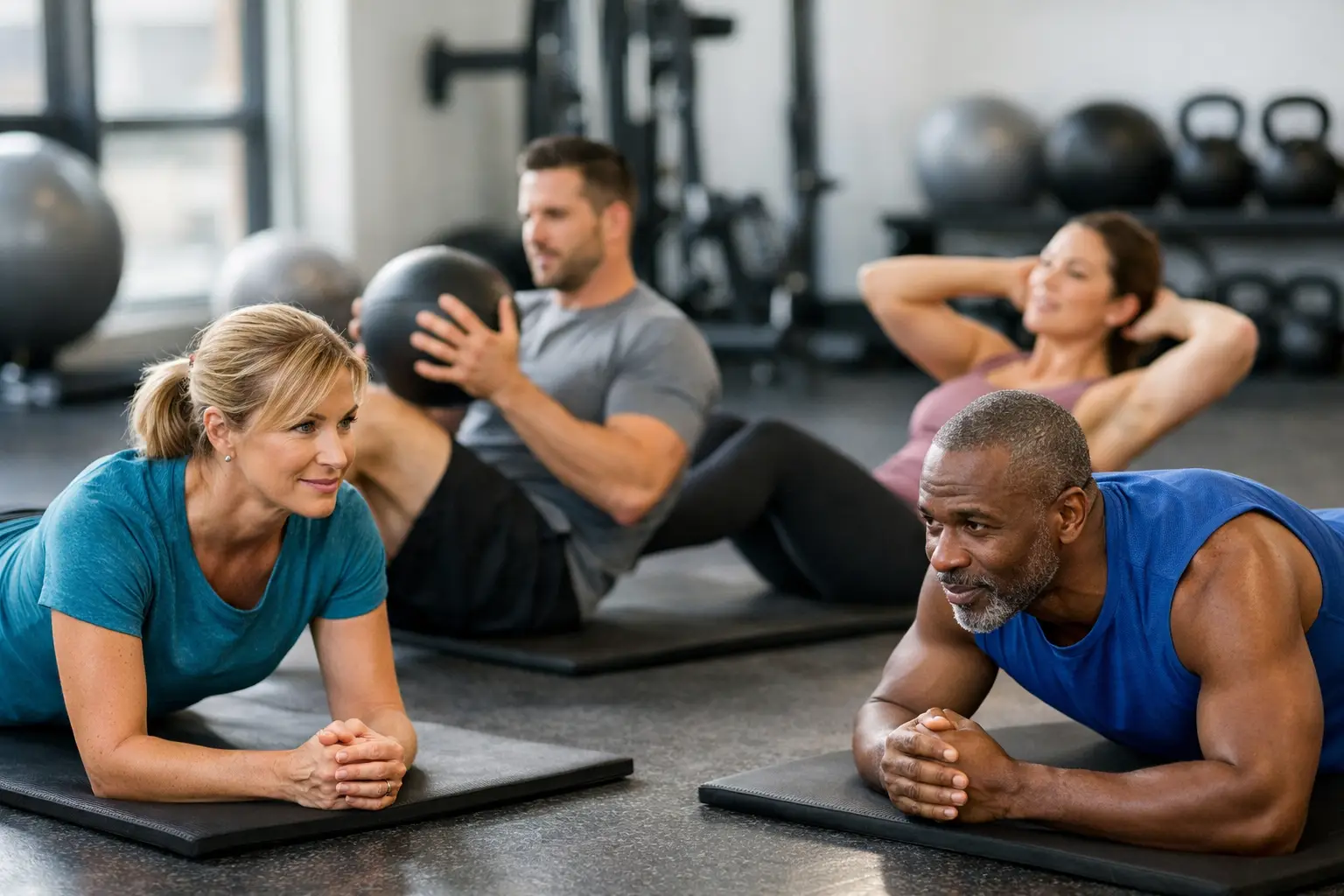
A strong core is what helps you carry groceries without straining, stand taller at your desk, move with confidence in class, and feel more stable when life gets busy. The best core exercises for adults are not always the hardest or flashiest. They are the movements you can perform with control, breathe through, and build on consistently.
Your core is more than your abdominal muscles. It includes the deep muscles around your trunk, hips, pelvis, lower back, and diaphragm. When these areas work together, they create the support your body needs for walking, lifting, reaching, twisting, and training safely. That is why a smart core routine should build stability, mobility, and body awareness – not just leave you sore after a long set of crunches.
What Makes a Core Exercise Worth Your Time?
For most adults, the most useful core work teaches the body to resist unwanted movement before adding bigger, more dynamic movement. In practical terms, that means learning to keep your ribs stacked over your pelvis, maintain a steady breath, and control your position as your arms or legs move.
This approach is especially valuable if you spend much of the day sitting, are returning to exercise, or want to complement strength training, running, golf, or other activities. It also supports better form during squats, lunges, rows, and everyday lifting.
The right exercise depends on your current fitness level, mobility, and training history. A beginner may get excellent results from a dead bug or supported plank, while a more experienced exerciser may need a longer lever, slower tempo, or added resistance. Quality always comes before intensity.
10 Best Core Exercises for Adults
1. Dead Bug
The dead bug is one of the most effective ways to build deep core control without putting unnecessary pressure on the neck or lower back. Lie on your back with your arms reaching toward the ceiling and your knees bent at 90 degrees. Exhale gently as you lower one heel toward the floor and reach the opposite arm overhead, then return with control.
Keep your low back from arching away from the floor. If that happens, make the range of motion smaller. This exercise is a strong starting point for beginners and a valuable reset for experienced exercisers who want better control.
2. Glute Bridge March
A stable core needs strong hips. In a glute bridge, your abdominal muscles and glutes work together to keep your pelvis steady. Start on your back with knees bent and feet hip-width apart. Lift your hips until your body forms a comfortable line from shoulders to knees, then slowly lift one foot a few inches off the floor without letting your hips tip or rotate.
Alternate sides at a pace that allows you to stay level. If marching feels too challenging, hold a regular bridge for 20 to 30 seconds. You will still build the hip and trunk stability that supports your back and posture.
3. Bird Dog
Bird dog trains the core to stabilize as the limbs move, which is exactly what you need for many daily activities. Begin on hands and knees with your hands under your shoulders and knees under your hips. Reach one leg back and the opposite arm forward, keeping your hips square to the floor.
Avoid lifting the leg so high that your back arches. Think about reaching long rather than reaching high. A slow pause at full extension can make this simple movement surprisingly challenging.
4. Forearm Plank
The plank earns its place because it builds total-body tension and teaches you to resist spinal extension. Place your forearms on the floor, step your feet back, and create a long line from head to heels. Press the floor away, gently draw your ribs down, and keep breathing.
There is no prize for the longest plank. A well-aligned 15-second hold is more productive than a 60-second hold with sagging hips and held breath. Modify by placing your knees on the floor or elevating your forearms on a bench.
5. Side Plank
Side planks target the muscles that help your trunk resist side bending and rotation. Those muscles matter when you carry a bag on one side, climb stairs, or change direction during exercise. Start on your forearm with your elbow beneath your shoulder and bend your knees if needed. Lift your hips and create a straight line through your torso.
Keep the top shoulder open instead of rolling forward. Begin with short holds on both sides. Over time, you can progress to straight legs or add a controlled top-leg lift.
6. Heel Taps
Heel taps offer a more accessible alternative to traditional crunches while still challenging the front of the core. Lie on your back with knees bent and feet lifted so your shins are parallel to the floor. Keeping your pelvis steady, lower one foot to tap the floor, then bring it back and switch sides.
The goal is not to move quickly. Move only as far as you can without your lower back lifting or your ribs popping upward. This is a great choice when you want to build endurance and confidence before progressing to more demanding abdominal work.
7. Pallof Press
The Pallof press is an anti-rotation exercise, meaning your core works to stop your torso from twisting. Stand sideways to a cable machine or resistance band anchored at chest height. Hold the handle at your chest, step away to create tension, then press your hands straight out and bring them back in.
Your hips and shoulders should stay facing forward throughout the movement. This is an excellent option for adults who want core training that transfers well to lifting, sports, and everyday tasks. Start with light resistance. If the band pulls you off position, it is too heavy.
8. Bear Plank Shoulder Tap
This movement adds a balance and coordination challenge to core stability. Start on hands and knees, then lift your knees one or two inches off the floor. Without shifting your body, tap one hand to the opposite shoulder and alternate.
Keep your knees low and your back long. If your hips sway from side to side, slow down or return your knees to the floor between taps. The work is in resisting the shift, not racing through repetitions.
9. Seated Knee Lift With Tall Posture
Not every effective core exercise has to happen on the floor. Sit near the front edge of a sturdy chair with both feet planted. Lengthen through your spine, lightly hold the sides of the chair if needed, and slowly lift one knee a few inches before lowering it. Alternate sides without leaning back.
This movement is approachable for adults who are building confidence, working around limited floor mobility, or easing back into exercise. It reinforces upright posture while challenging the muscles that help control the pelvis.
10. Pilates Hundred Prep
Pilates-inspired training is known for its emphasis on breath, alignment, and controlled strength. For a Hundred prep, lie on your back with knees bent and feet on the floor or legs in tabletop if that feels appropriate. Reach your arms long by your sides, lift your head and shoulders only if your neck is comfortable, and make small arm pumps while breathing steadily.
A full Pilates Hundred can be demanding, so there is no need to force the traditional version. The prep helps you practice deep abdominal engagement and intentional breathing while respecting your starting point.
How to Build a Core Routine That Sticks
You do not need to do all 10 exercises in one session. Choose three or four movements that match your level and perform them two or three times per week. For example, a beginner might use dead bugs, glute bridges, bird dogs, and seated knee lifts. Someone with more experience could pair forearm planks, side planks, Pallof presses, and bear plank shoulder taps.
Aim for two or three sets of six to 10 controlled repetitions per side, or holds of 15 to 30 seconds. Rest when your form starts to fade. Core training should leave you feeling challenged and more connected to your body, not compressed or strained.
Breathing is part of the work. Exhale during the most challenging portion of each rep, and avoid holding your breath to force a position. If you feel sharp pain, numbness, dizziness, or persistent low-back discomfort, stop and speak with a qualified health professional before continuing.
Better Core Strength Starts With Coaching and Consistency
The best routine is the one you can perform well enough to repeat. Small improvements in control can add up to easier movement, better posture, and more confidence in every workout. At TNT Fitness Studio B, guided Pilates and functional strength training can help you find the right progression, get feedback on your form, and stay motivated alongside a supportive community.
Start where you are, move with intention, and let consistent practice build the strong foundation your everyday life deserves.