If you catch yourself rounding over your laptop, shifting your weight unevenly when you stand, or feeling tight through your neck and hips by the end of the day, you are not alone. The question of Pilates vs yoga for posture comes up often because both can help – but they do it in different ways, and the best choice depends on what your body needs most right now.
Good posture is not about forcing yourself to sit perfectly straight all day. It is about how well your body supports itself when you sit, stand, walk, lift, and move through real life. That means posture improves when you build strength in the right places, restore mobility where you are stiff, and learn better body awareness. Both Pilates and yoga can support that process. They just take different paths.
Pilates vs yoga for posture: the real difference
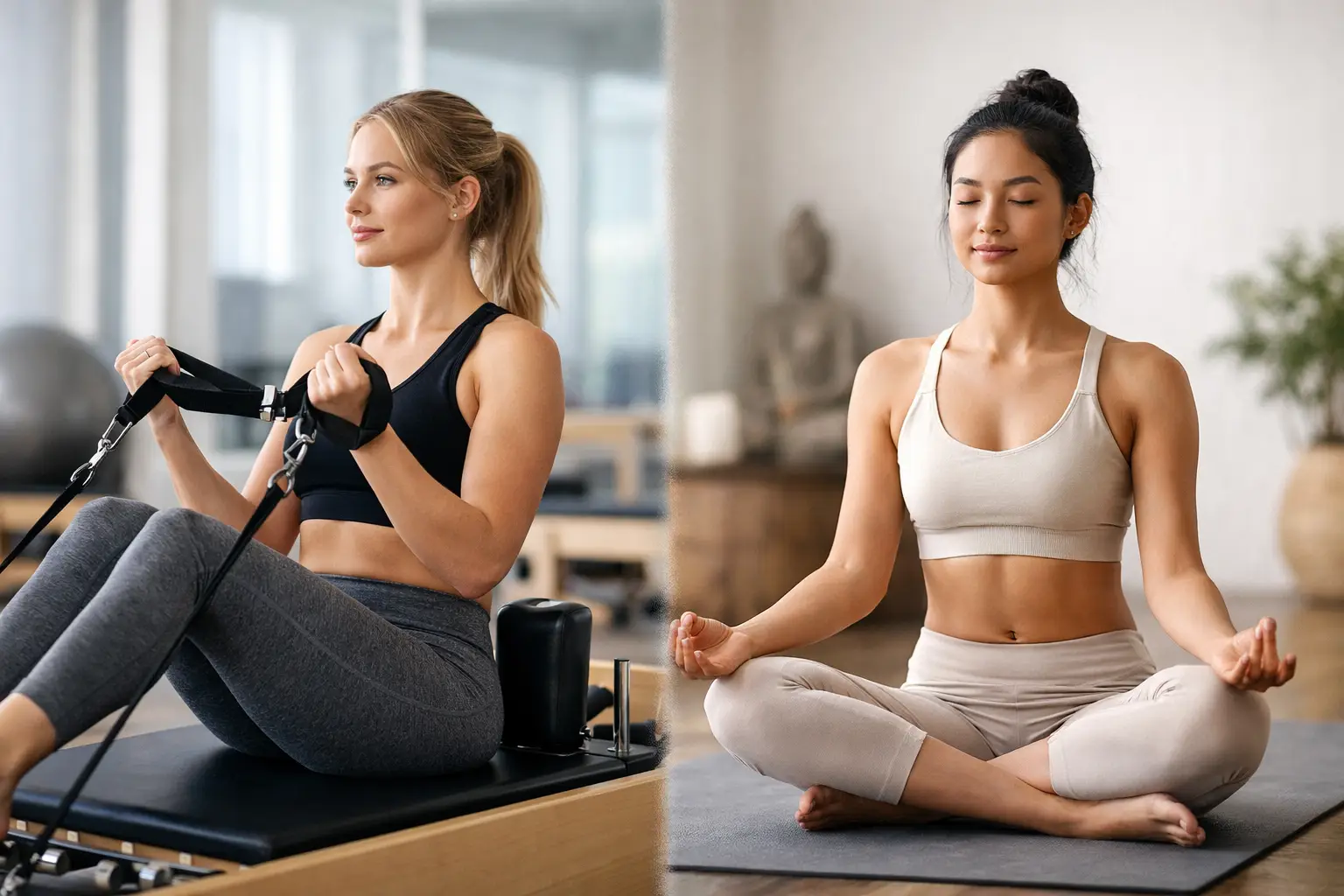
Pilates is usually more targeted when the goal is posture correction. It emphasizes core control, spinal alignment, pelvic positioning, and muscular balance. In a good Pilates class, you are not just stretching or moving for the sake of movement. You are learning how to stabilize your trunk, activate the deep abdominals, support your shoulders, and move with more control.
Yoga often takes a broader approach. It can absolutely improve posture, especially when poor posture is tied to stiffness, stress, shallow breathing, or lack of body awareness. Many yoga styles help lengthen tight muscles, open the chest, improve thoracic mobility, and bring attention to how you hold yourself. For someone who feels compressed and tense, that can be a big win.
So if you want the short answer, Pilates is often better for posture when weakness and instability are the main problems. Yoga is often better when tension and limited mobility are the main issues. Of course, many people have both.
Why posture problems happen in the first place
Most posture issues are not just one thing. They are usually a mix of habits, strength deficits, mobility restrictions, and stress.
If you sit for long hours, your hips may get tight, your upper back may stiffen, and your glutes and deep core may stop doing their share of the work. If you train hard but skip mobility, you may have strength without enough freedom of movement. If you feel stressed and tired, you may breathe shallowly, elevate your shoulders, and carry tension through your neck and jaw.
That is why posture is rarely fixed by a single cue like “shoulders back.” Your body needs a better system, not just a reminder.
How Pilates improves posture
Pilates is especially effective for posture because it teaches control from the center of the body outward. That matters because posture depends on support, not stiffness.
In Pilates, you work on deep core engagement, spinal articulation, pelvic stability, shoulder placement, and coordination. These pieces matter for everyday alignment. When your trunk is stronger and your body is better organized, you are less likely to collapse into your lower back, round through your shoulders, or shift into compensations.
Another advantage is precision. Pilates exercises are often built around small adjustments that reveal where you are weak, tight, or off-center. Maybe one side of your rib cage flares more. Maybe your hips tilt forward. Maybe your shoulders do not sit evenly. Pilates helps you notice those patterns and retrain them.
This is especially helpful for people who spend a lot of time at a desk, those returning to exercise after a break, and active adults who want better body mechanics without high-impact training.
Best posture benefits of Pilates
Pilates tends to shine in a few key areas. It builds deep core endurance, which helps support the spine over time instead of only for a few seconds when you remember to “stand tall.” It also strengthens the muscles around the shoulder blades, which can improve upper-body positioning. And because many movements train pelvic and spinal control, it can help reduce the swayback or tucked-under patterns that throw off full-body alignment.
If your posture issue feels like weakness, wobbliness, poor coordination, or a lack of support, Pilates is often a smart starting point.
How yoga improves posture
Yoga helps posture in a different but still valuable way. Many people with posture issues are not only weak. They are also tight, guarded, and disconnected from their breathing. Yoga addresses that side of the equation well.
A thoughtful yoga practice can lengthen the front of the body, release tight hip flexors, improve hamstring and chest mobility, and create more movement through the thoracic spine. It also encourages mindfulness, which matters more than people think. You cannot change a posture habit you do not notice.
Breath is another major benefit. When you breathe more fully, your rib cage moves better, your neck and shoulders can relax, and your trunk can support you in a more natural way. For people whose posture worsens under stress, yoga can be a powerful reset.
Best posture benefits of yoga
Yoga may be the better fit if your posture feels rigid rather than unstable. If you are constantly tight through your chest, upper back, hips, or hamstrings, yoga can help restore range of motion so you are not fighting your own body. It can also help people who feel mentally tense or disconnected from movement. Sometimes posture improves once the body stops bracing all day.
That said, not all yoga classes are equally posture-friendly. Faster or more advanced classes may move too quickly for beginners to build awareness. And if you are very flexible already, yoga alone may not give you enough strength to hold better alignment consistently.
Pilates vs yoga for posture: which one should you choose?
The honest answer is that it depends on your starting point.
Choose Pilates first if you want more core support, better spinal stability, stronger postural muscles, and more structured guidance on alignment. It is often the better option for beginners who need clear coaching, for adults with desk-related posture issues, and for people who want low-impact strength that carries over into daily life.
Choose yoga first if you feel stiff, compressed, stressed, or limited in mobility. It can be a great match if your posture improves when you relax, breathe deeply, and create more length through tight areas.
For many people, the best answer is not Pilates or yoga. It is Pilates and yoga, used with intention. Strength without mobility can feel rigid. Mobility without strength can feel unstable. Better posture usually lives in the middle.
What to watch out for
Neither method is magic if the class does not match your needs.
A Pilates class that is too advanced, too fast, or poorly coached can turn into a series of movements without enough awareness. A yoga class that focuses only on flexibility can leave you feeling looser but not necessarily better supported. In both cases, instruction matters.
That is why coaching and personalization make such a difference. When an instructor helps you understand your movement patterns, scale exercises appropriately, and stay consistent, posture changes happen faster and tend to last longer.
A practical way to decide
Ask yourself a few simple questions. Do you feel weak through your middle, slouched when you get tired, or unstable when you stand on one leg? Pilates may give you the structure you need. Do you feel stiff through your chest, hips, or upper back, especially after long workdays? Yoga may help you move more freely.
If you are not sure, start with the option that feels more accessible and sustainable. The best posture program is the one you will actually stick with long enough to see change.
For many adults, especially those wanting support, accountability, and clear instruction, Pilates is the easier entry point because it tends to be more directly focused on alignment and control. At TNT Fitness Studio B, that is one reason Pilates remains such a strong option for people who want to improve posture while also building strength, mobility, and confidence in their bodies.
The bigger picture behind better posture
Posture is not just how you look when you stand still. It affects how you breathe, how your joints absorb force, how comfortable you feel during workouts, and even how much energy you have at the end of the day. When your body is better aligned, everyday movement feels easier.
That is also why perfection is not the goal. Real progress looks like less neck tension, stronger core endurance, better shoulder positioning, more comfortable standing, and fewer moments where your body feels like it is fighting itself.
If you are choosing between Pilates vs yoga for posture, do not worry about picking the “perfect” method. Pick the one that helps you move with more awareness and consistency, then build from there. A stronger, more supported posture is not about forcing your body into place. It is about training it to work better for you, one session at a time.